












‘Won’t Apologize’: Trump Stands by Deleted Racist Post Targeting the Obamas :
Prime Vista News
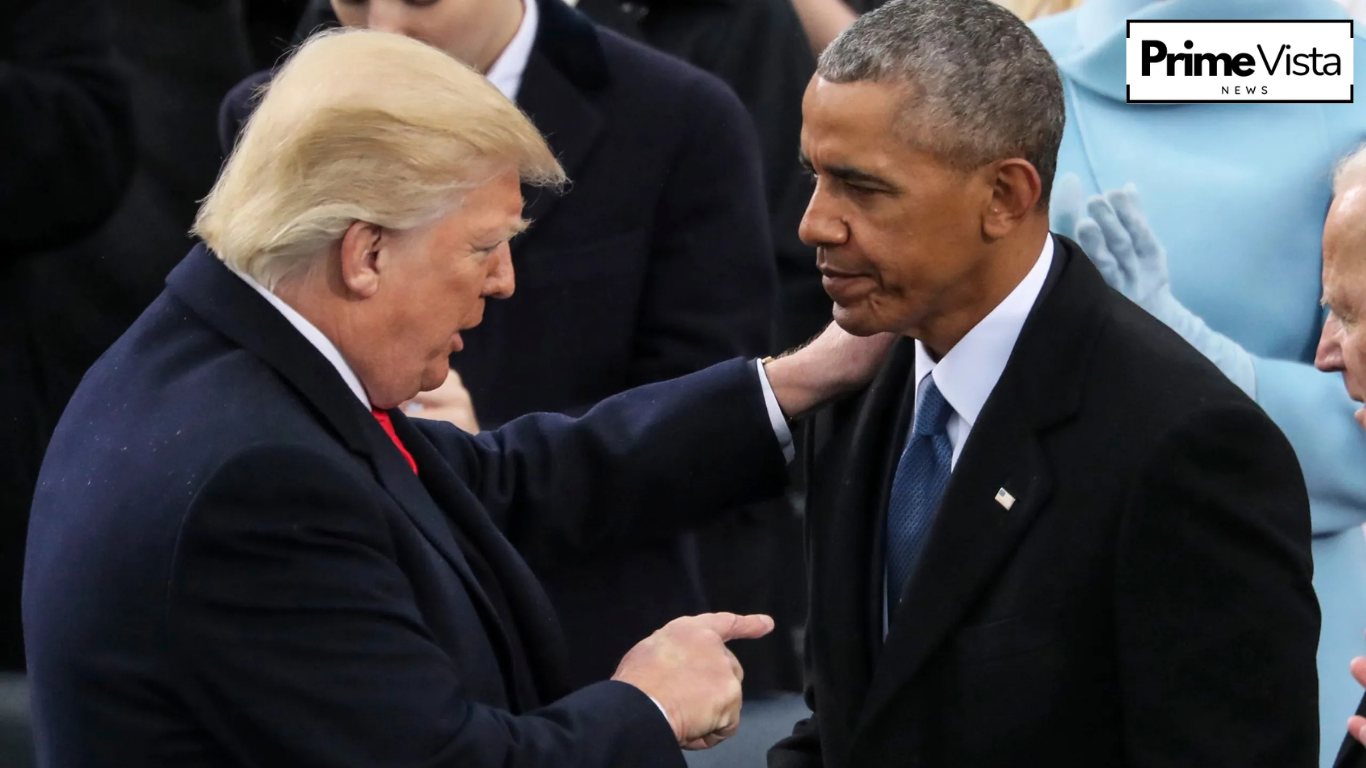
US President Donald Trump has refused to apologise after a racist social media post depicting former President Barack Obama and former First Lady Michelle Obama as primates was deleted following widespread backlash from across the political spectrum.
The controversial post, shared on Trump’s Truth Social account late Thursday night, featured a video that included a brief clip of jungle primates with the Obamas’ faces superimposed on them. The video was removed by Friday afternoon after condemnation from civil rights groups, Democratic leaders, and several senior Republicans, who described the content as offensive and unacceptable.
Speaking later on Friday, Trump dismissed calls for an apology. “I didn’t make a mistake,” he said, maintaining his stance despite criticism from within his own party.
White House Blames Staffer, Sparks Accountability Questions
Following the backlash, the White House said the post had been shared by a staff member “in error.” Press Secretary Karoline Leavitt initially brushed aside criticism as “fake outrage” before the video was taken down. After renewed pressure including appeals from Republican lawmakers the administration acknowledged the post should not have been shared.
The explanation, however, raised questions about oversight of the president’s social media accounts. Trump has frequently used his platforms to announce policy decisions, threaten military action, impose tariffs, and attack political opponents. He often signs or initials official posts, making it unclear when content is personally authored by him versus staff.
The White House did not immediately clarify how posts are vetted or how the public can distinguish between official statements and staff-generated content.
Part of a Broader Pattern
The deleted video appeared amid a flurry of overnight posts in which Trump repeated false claims that the 2020 US presidential election was stolen assertions that have been rejected by courts nationwide and by Trump’s own former attorney general.
Trump has a long history of directing intensely personal attacks at the Obamas and using racially charged rhetoric. Over the years, he promoted the false “birther” conspiracy claiming Obama was not born in the United States, referred to majority-Black nations in derogatory terms, and used language widely condemned as dehumanising toward minorities and immigrants.
The timing of the post also drew sharp criticism, as it came during the first week of Black History Month just days after Trump issued a proclamation praising the contributions of Black Americans and reaffirming national ideals of liberty and equality.
An Obama spokesperson said the former president had no response to the incident.
Delhi Police have traced 72 missing persons in the Southwest district as part of Operation Milap, highlighting the scale of missing cases in the capital.
The Video and Its Origins
Nearly all of the 62-second video shared by Trump originated from a conservative clip alleging election tampering during the 2020 vote count. Near the end of the video, a brief segment shows two primates in a jungle setting, with the Obamas’ faces digitally imposed.
Those frames reportedly came from a separate internet meme previously circulated by a well-known conservative content creator. The meme depicts Trump as “King of the Jungle” and portrays Democratic leaders as animals, including President Joe Biden who is white also shown as a primate.
Leavitt defended the video’s origins by describing it as a parody. However, critics noted that such imagery has long been associated with racist tropes targeting Black individuals.
By noon Friday, the post had been deleted, with responsibility attributed to a subordinate.
Condemnation From Across the Political Spectrum
The reaction was swift and unusually broad. Republican Senator Tim Scott of South Carolina, the only Black Republican in the US Senate, called for the post’s removal, saying he hoped it was fake because it was “the most racist thing” he had seen from the White House.
Senator Roger Wicker of Mississippi described the post as “totally unacceptable” and said the president should apologise. Several Republicans facing tough re-election campaigns also voiced concern, marking a rare instance of public intra-party criticism of Trump.
Congressional Black Caucus Chairwoman Yvette Clarke rejected the White House’s explanation, saying the incident reflected a deeper problem. “If there wasn’t a toxic and racist climate, this wouldn’t happen,” she said, calling Trump’s behaviour consistent with his past actions.
Voices From the Public
At a Black History Month market in Harlem, New York, vendor Jacklyn Monk described the post as embarrassing. “He’s representing our country. It’s horrible this month or any month,” she said.
Civil rights leader Rev Bernice King, daughter of Martin Luther King Jr, responded by quoting her father’s words affirming Black dignity and pride. “We are not apes,” she wrote, condemning the imagery as dehumanising.
NAACP President Derrick Johnson labelled the video “utterly despicable” and suggested Trump was attempting to divert attention from other political and legal challenges. “You know who isn’t in the Epstein files? Barack Obama,” Johnson said, adding that Obama had strengthened the economy during his presidency.
A Long and Troubling History
Historians note that associating Black people with animals has deep roots in American racism, dating back to the 18th century and pseudo-scientific theories used to justify slavery and segregation. Obama himself was repeatedly depicted as a primate during his presidency by fringe groups and racist merchandise sellers.
Trump’s past remarks including describing immigrants as “poisoning the blood” of the nation and referring to majority-Black countries in crude terms have drawn repeated comparisons to historical dehumanizing rhetoric.
Despite mounting criticism, Trump has shown no indication of reversing course or issuing an apology, reinforcing concerns that racially charged language remains a recurring feature of his political communication.