










The Abhishek Sharma Question: Will Markram or Linde Take the Early Punt ?
Prime Vista News
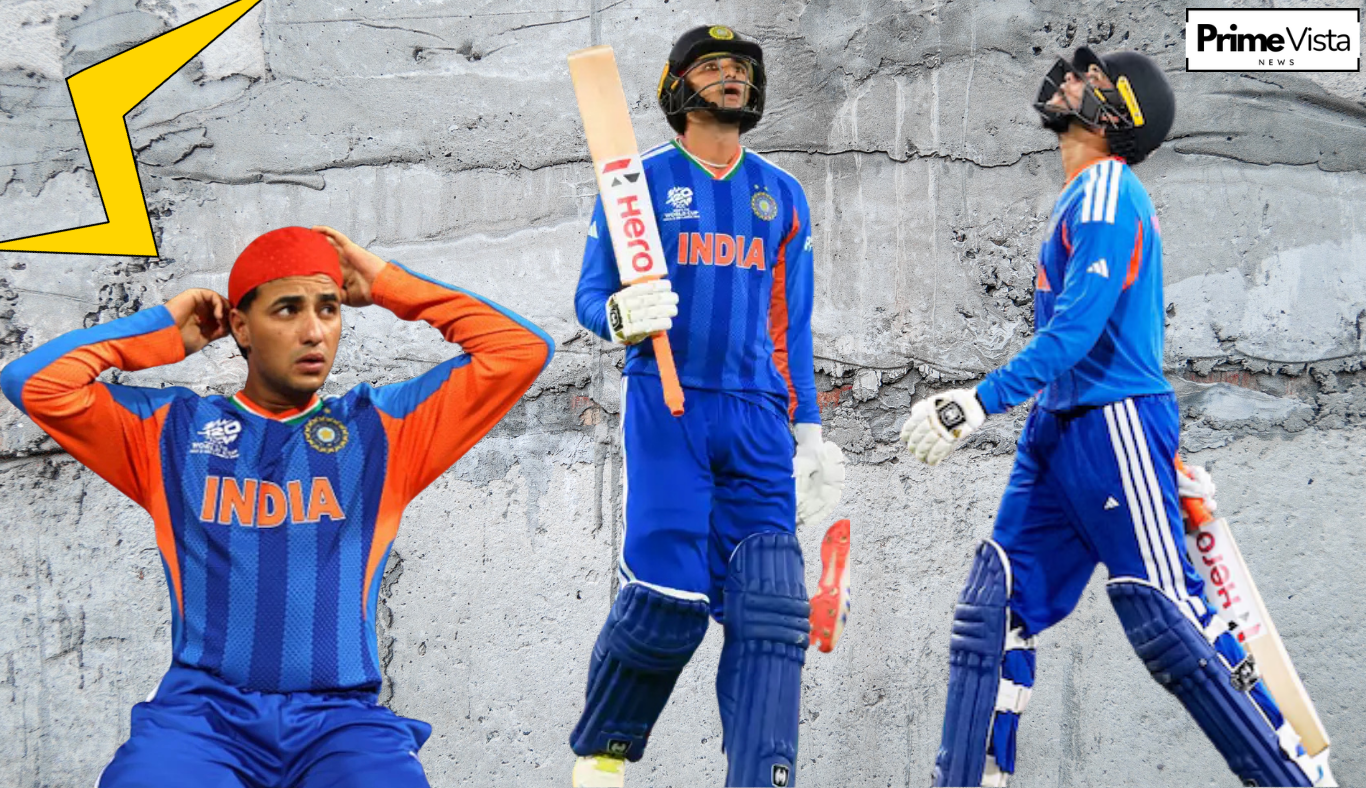
Abhishek Sharma’s lean patch in the T20 World Cup has sparked tactical questions ahead of India’s Super Eight clash against South Africa. Can he rediscover his rhythm when it matters most?
A sudden dip in form, unfamiliar conditions, or simply a brief interruption caused by illness the reasons behind Abhishek Sharma’s struggles at the ongoing T20 World Cup have become a subject of intense discussion, even as India continue their unbeaten run.
The prolific left-handed opener, known for a staggering strike rate in excess of 192, has endured an uncharacteristic run of three consecutive ducks. Yet, among those who have closely followed his rise, the belief remains firm: form may fluctuate, confidence does not.
Abhishek’s lean patch has coincided with his return to competitive cricket less than a week after being hospitalized with a stomach infection a disruption that may explain the timing of his struggles more than any technical flaw.
Conditions and Context
Slow and abrasive surfaces have offered little assistance to Abhishek’s natural game, which thrives on pace and true bounce. The wickets at Wankhede, Colombo, and Motera have demanded patience and restraint qualities not typically associated with his expansive bat swing.
While India’s collective strength has ensured that results remain unaffected so far, the stakes rise significantly as the Super Eight stage begins on Saturday, with India facing South Africa on February 22.
It is here that Abhishek’s role becomes increasingly vital.
Markram’s Tactical Dilemma
South Africa captain Aiden Markram, having studied Abhishek’s recent dismissals, may consider unconventional options inside the Powerplay. Instead of opening with pace spearheads Kagiso Rabada and Lungi Ngidi, Markram could turn to his own off-spin or deploy left-arm orthodox George Linde early to exploit the conditions.
Recent dismissals at the hands of off-spinners have raised eyebrows, but deeper analysis suggests this may be misleading.
No Evidence of a Technical Flaw
A senior IPL batting coach, who has analysed Abhishek’s game extensively and requested anonymity, dismissed suggestions that bowlers have “decoded” the batter.
“Not at all,” the coach said. “Caught at deep extra cover in the first game was off a bad ball — six on another day. Bowled by an incoming delivery doesn’t indicate a pattern, and getting caught at mid-on can happen to anyone.”
He also clarified that there is no statistical evidence pointing to a chronic weakness against off-spin.
“Abhishek generally plays off-spin well. There’s nothing untoward there,” the coach added.
Earlier Coverage : India Aim for Historic First Bilateral Women’s T20I Series Win in Australia at Adelaide Finale
The Real Challenge: Pace Off the Ball
What has troubled Abhishek more consistently is the lack of pace in the surface. Slower bouncers, cutters, and knuckleballs staples of modern T20 bowling are always challenging for batters with deep, powerful swings.
On quicker tracks, these same shots have brought him immense success.
This phase marks the first sustained test of Abhishek’s young international career. Signs of self-doubt have crept in subtly, reflected in superstitious gestures including wearing teammates Arshdeep Singh and Mohammed Siraj’s jerseys perhaps in search of a change in fortune.
Coaching and Confidence
This is where batting coach Sitanshu Kotak assumes a crucial role. In a format that allows little time for emotional resets, the inability to dwell too long on failure can sometimes be a blessing.
Abhishek’s personality suggests resilience rather than fragility. Still, he is aware that India’s campaign depends significantly on the momentum he provides at the top.
A Timely Reminder from History
If inspiration is needed, history offers perspective.
In 1994, Sachin Tendulkar once endured three consecutive ducks followed by a single-digit score in ODIs. In the very next match, he responded with a match-winning 115 against New Zealand a turning point that changed the narrative entirely.
Abhishek Sharma would hope to follow a similar arc not just returning to form, but doing so emphatically, when it matters most.