












‘Something Big Is Happening’: $2 Trillion Metals Wipeout Shakes Global Markets !
Prime Vista News
Gold and silver lose $2 trillion in hours as rising US bond yields, a stronger dollar, and forced selling shake global markets despite ongoing Iran war tensions.
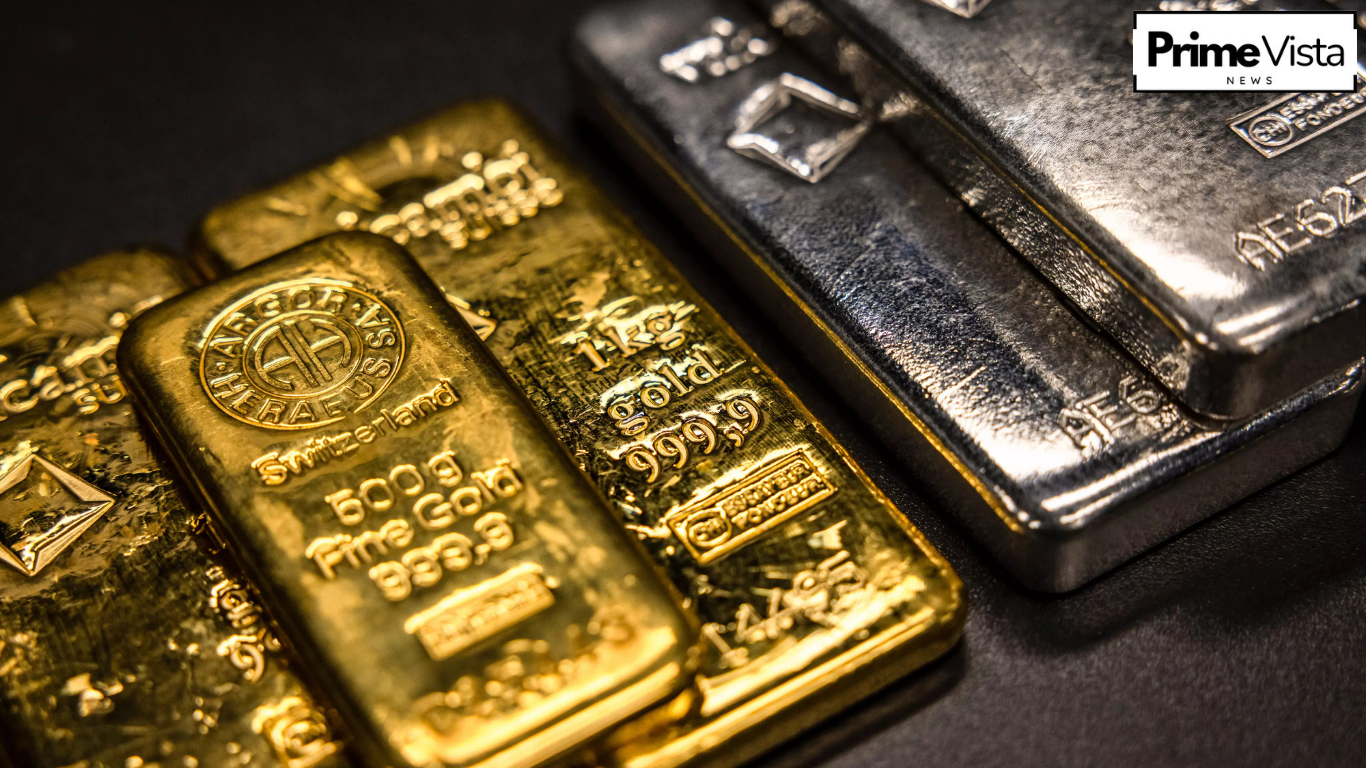
New Delhi : A dramatic and unexpected sell-off in global commodities has rattled financial markets, with gold and silver losing an estimated $2 trillion in value within just a few hours of chaotic trading. The sudden wipeout has raised serious concerns among analysts and investors, particularly because it unfolded during a period of heightened geopolitical tensions, when such assets are traditionally expected to surge.
Market watchers say the scale, speed, and timing of the crash point to a deeper structural shift in global financial behaviour one that may redefine how investors perceive so-called “safe haven” assets.
A Collapse That Defies Market Logic
The sharp fall in precious metals has surprised even seasoned analysts. Traditionally, gold and silver tend to rally during periods of uncertainty, especially during armed conflicts or economic instability.
However, the recent downturn has turned that expectation on its head.
Despite ongoing geopolitical tensions in the Middle East and elevated oil prices, precious metals moved in the opposite direction. At the same time, US equity futures showed signs of stability, further highlighting the unusual nature of the market reaction.
According to market research firm The Kobeissi Letter, the event represents a rare “once-in-a-cycle stress event” unfolding in plain sight.
What Triggered the $2 Trillion Sell-Off?
Analysts point to a combination of macroeconomic pressures and technical market factors that converged to trigger the crash.
1. Rising US Bond Yields
One of the biggest drivers has been the sharp rise in US Treasury yields.
- The 10-year US Treasury yield has surged close to 4.4%
- Markets are pricing in persistent inflation and fewer rate cuts
- Higher yields make bonds more attractive compared to non-yielding assets like gold
As yields climb, institutional investors often rotate capital away from metals into government securities that offer better returns.
2. Stronger US Dollar
The strengthening of the US dollar has further compounded the pressure on metals.
- A stronger dollar makes gold and silver more expensive for global buyers
- Investors increasingly view the dollar as a more liquid and reliable safe haven
This dual impact has significantly weakened demand for bullion in international markets.
3. Forced Deleveraging and Margin Calls
Beyond macroeconomic trends, market structure played a crucial role in amplifying the fall.
After months of strong gains, gold and silver markets were heavily leveraged, with traders using:
- Futures contracts
- Options
- Leveraged exchange-traded products
Once prices began to decline, a cascade of events followed:
- Stop-loss orders were triggered
- Margin calls forced traders to liquidate positions
- Liquidity dried up rapidly
These conditions created what analysts describe as “air pockets” in the market zones where prices fall sharply due to the absence of buyers.
“This Is Not a Trend, It’s a Liquidation Event”
Market participants believe the crash is not part of a broader trend but rather a forced unwinding of leveraged positions.
A Bengaluru-based trader, Naveen, described the situation as a “historic liquidity event.”
According to him:
- The $2 trillion wipeout reflects margin-driven selling, not fundamentals
- Rising yields have triggered a system-wide repricing of risk assets
- Gold and silver are being used as liquidity sources to cover losses elsewhere
This suggests that metals are temporarily losing their status as crisis hedges and are instead behaving like risk assets.
Impact Visible in Indian Markets
The ripple effects of the global sell-off were clearly visible in Indian commodity markets as well.
As of midday trading on March 23:
- MCX iCOMDEX Base Metal Index fell by 1.68%
- Gold futures (April 2026) dropped 8.11% to ₹1,32,767 per 10 grams
- Silver futures (May 2026) plunged 10.72% to ₹2,02,465 per kilogram
Other metals also came under pressure:
- Copper declined by around 2.76%
- Zinc and other base metals recorded losses
Gold exchange-traded funds (ETFs) also witnessed significant outflows, with several funds falling between 6% and 9% in a single session.
Signs of a Large-Scale Liquidation?
While no specific entity has been identified, market behaviour suggests the possibility of a large leveraged player being forced to exit positions.
Indicators include:
- Sharp and erratic intraday price swings
- Steep decline in silver prices from recent highs
- Simultaneous fall across global and Indian markets
- Heavy selling in leveraged financial products
Such patterns are typically associated with institutional liquidation rather than retail-driven activity.
Safe Haven Narrative Under Pressure
Perhaps the most concerning aspect of the episode is what it reveals about changing market dynamics.
Gold has long been considered the ultimate hedge against uncertainty. However, recent developments suggest that this perception may be shifting.
Key concerns include:
- Rising yields reducing gold’s attractiveness
- Stronger dollar competing as a safe haven
- Increasing role of algorithmic and leveraged trading
- Liquidity risks during market stress
The result is a scenario where gold behaves less like a protective asset and more like a volatile financial instrument.
Broader Implications for Global Markets
Analysts warn that the metals crash could be a precursor to wider market instability.
If similar conditions rising yields, tight liquidity, and leveraged positioning spread to other asset classes, the impact could extend to:
- Credit markets
- Emerging economies
- Technology stocks
The sudden breakdown in a traditionally stable asset class raises questions about how other markets might react under similar pressure.
A Market Signal That Cannot Be Ignored
The $2 trillion wipeout in gold and silver is more than just a sharp correction it is a signal that underlying market structures may be shifting.
With geopolitical tensions still high, oil prices elevated, and financial conditions tightening, the disconnect between traditional expectations and actual market behaviour is becoming increasingly evident.
Investors and policymakers alike are now closely watching whether this event remains isolated or marks the beginning of a broader recalibration across global financial markets.