











Nirmala Sitharaman Makes History With Ninth Consecutive Budget – India’s Longest-Serving Finance Minister on Record:
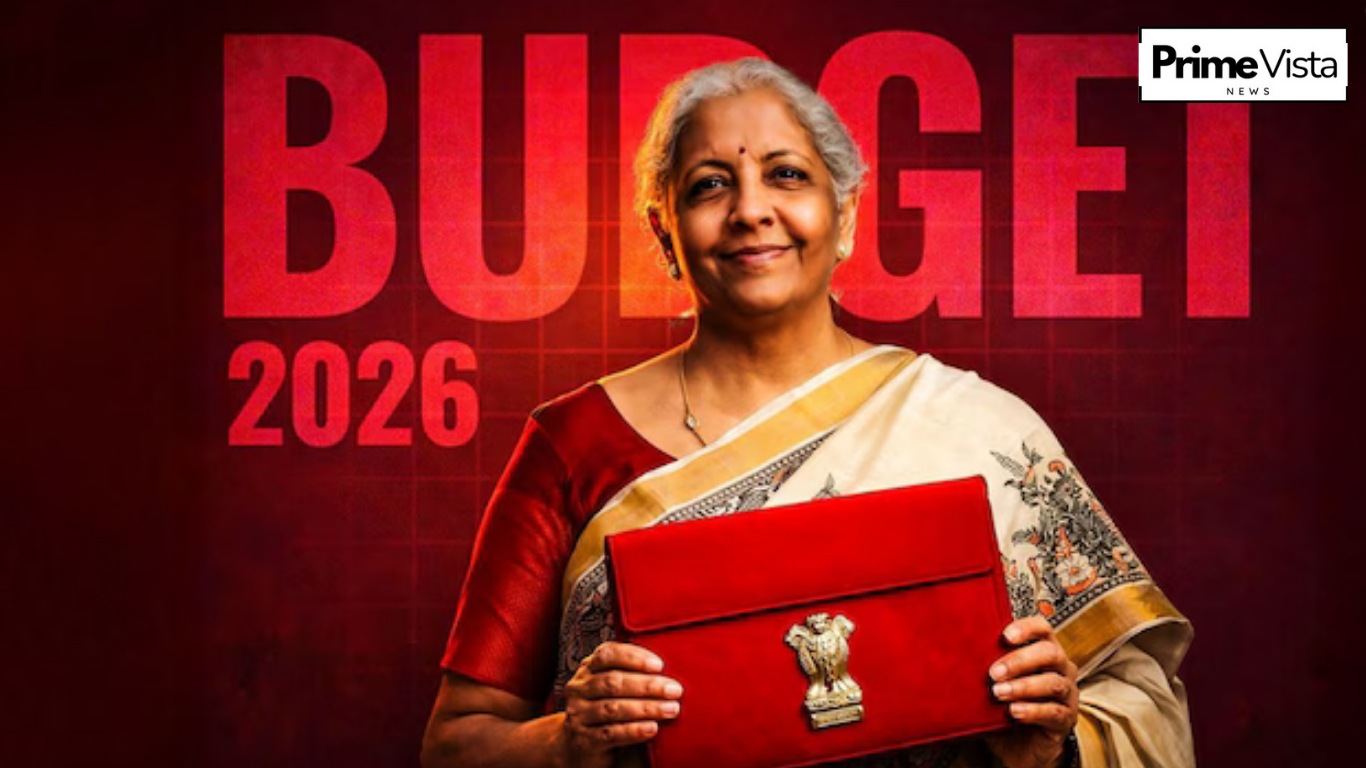
New Delhi – Union Finance Minister Nirmala Sitharaman on Sunday entered the history books by presenting her ninth consecutive Union Budget, setting a new standard for continuity in India’s economic leadership. The landmark achievement reinforces continuity in fiscal policy at a time when the government is focused on sustaining growth, maintaining fiscal discipline and navigating global trade headwinds.
The Union Budget 2026 represents a pivotal moment for the Indian economy, reflecting the government’s commitment to growth and fiscal responsibility.
As we look ahead to the Union Budget 2026, the emphasis remains on sustainable development and economic resilience.
Sitharaman’s uninterrupted run under Prime Minister Narendra Modi surpasses all recent Finance Ministers and places her among the most enduring economic stewards in India’s democratic history.
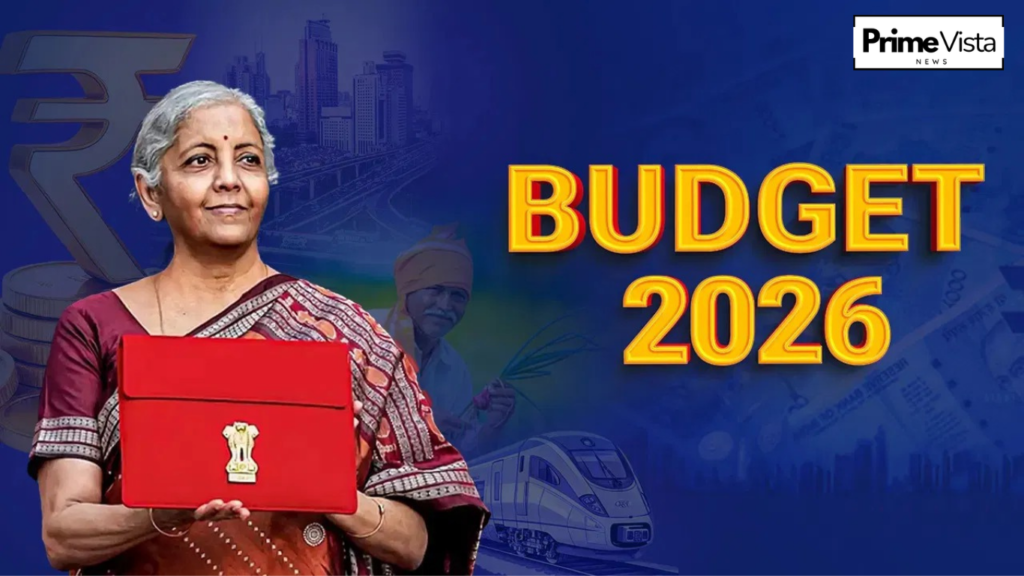
With the Union Budget 2026 approaching, analysts are keenly observing the potential impacts on various sectors.
The discussions leading to the Union Budget 2026 are crucial for businesses and investors alike.
A Rare Milestone in India’s Parliamentary History
The Union Budget 2026 is expected to address key issues such as infrastructure and social welfare.
Stakeholders are eagerly awaiting the Union Budget 2026 to gauge future economic policies.
In the context of the Union Budget 2026, collaboration between various sectors will be pivotal.
The historical significance of the Union Budget 2026 cannot be understated as it shapes India’s economic landscape.
Sitharaman’s ninth consecutive Budget takes her one step closer to matching the all-time record of 10 Budgets presented by Morarji Desai, who served in multiple terms during the 1950s and 1960s. Desai, who later became Prime Minister, presented six Budgets between 1959 and 1964, followed by four more from 1967 to 1969.
As preparations for the Union Budget 2026 intensify, public expectations are high.
Reflecting on past Budgets, the Union Budget 2026 aims to build a more robust economic framework.
The introduction of innovative measures in the Union Budget 2026 will be vital to address current challenges.
Furthermore, the Union Budget 2026 will likely focus on enhancing public welfare initiatives.
The Union Budget 2026 will aim to balance growth while ensuring fiscal sustainability.
With the Union Budget 2026 on the horizon, economic forecasts are being closely monitored.
Both P. Chidambaram and Pranab Mukherjee, two of India’s well-known former finance ministers, presented nine and eight Budgets respectively but these were spread across different governments and Prime Ministers, making Sitharaman’s string of nine continuous presentations unique.
Unbroken Run Under a Single Government
Sitharaman first assumed charge of the Finance Ministry on May 31, 2019, after being appointed India’s first full-time woman Finance Minister following Prime Minister Narendra Modi’s second term victory. She has remained in the role since then, guiding fiscal strategy through the COVID-19 pandemic, economic recovery and geopolitical uncertainties.
Completing six years and eight months in office as of January 31, 2026, Sitharaman’s ninth Budget presentation on February 1 marks a historic streak in Indian governance.
Prime Minister Modi had earlier noted that her achievement would be remembered with pride in India’s parliamentary annals.
The implications of the Union Budget 2026 for various industries are a topic of great interest.
Context: India’s Budget Traditions and Practises
The first Union Budget of independent India was presented on November 26, 1947, by R.K. Shanmukham Chetty, marking the beginning of a tradition that has evolved significantly over more than seven decades.
For many years, the Budget was presented on February 28 at 5 p.m., a timing inherited from the British colonial era to align with London’s business hours. In 1999, then Finance Minister Yashwant Sinha shifted the practice to 11 a.m. to better suit India’s parliamentary schedule.
In 2017, the Budget presentation date was moved to February 1 to enable Parliament to complete approvals before the start of the new fiscal year on April 1. This allows timely implementation of new policies from the beginning of the financial year.
Ultimately, the Union Budget 2026 will set the tone for India’s economic strategy in the years to come.
Leaders With Notable Parliamentary Budget Records
| Name | Budgets Presented | Context |
|---|---|---|
| Morarji Desai | 10 Budgets | Across different terms in 1950s–60s |
| Nirmala Sitharaman | 9 Consecutive | Under PM Narendra Modi (2019–2026) |
| P. Chidambaram | 9 | Under different governments |
| Pranab Mukherjee | 8 | Under Congress-led UPA |
Historic Budget Speech Records
- Longest Speech: Nirmala Sitharaman set the record for the longest Budget speech on February 1, 2020, lasting 2 hours and 40 minutes.
- Shortest Speech: The shortest Budget speech was delivered in 1977 by Hirubhai Mulljibhai Patel, at just 800 words.
Other notable finance leaders include C.D. Deshmukh, who served for over six years in the early years of independent India, and Manmohan Singh, who later became Prime Minister after serving as Finance Minister from 1990 to 1996.
In a long-awaited development, Prime Minister Narendra Modi inaugurated the Halwara Airport for Ludhiana after nearly 30 Years of Delay.
What This Means for India’s Economy ?
Sitharaman’s continued leadership in economic policy reflects the government’s focus on consistency in fiscal priorities, especially as India emerges as one of the fastest-growing major economies globally. Her Budgets have spanned pandemic recovery, infrastructure expansion and reforms aimed at boosting manufacturing, jobs and investment.
Clarification :
Union Budget in Independent India
First Union Budget :
The first Union Budget of independent India was presented on November 26, 1947, by the country’s first Finance Minister, R.K. Shanmukham Chetty, marking the beginning of India’s post-Independence fiscal journey.
Most Budgets Presented :
Former Prime Minister Morarji Desai holds the record for presenting the highest number of Union Budgets. He delivered 10 Budgets across different tenures as Finance Minister — six between 1959 and 1964, and four more from 1967 to 1969, serving under Prime Ministers Jawaharlal Nehru and Lal Bahadur Shastri.
Second Highest :
Former Finance Minister P. Chidambaram presented the Union Budget nine times under different governments. His first Budget was in 1996 during the United Front government, followed by multiple Budgets during the Congress-led UPA years between 2004 and 2008, and again in 2013 and 2014.
Third Highest :
Pranab Mukherjee delivered eight Union Budgets during his tenure as Finance Minister. These included Budgets in 1982, 1983, and 1984, and five consecutive presentations between 2009 and 2012 during the UPA government.
Longest Budget Speech :
Finance Minister Nirmala Sitharaman holds the record for the longest Union Budget speech, delivered on February 1, 2020. Her address lasted two hours and 40 minutes, even after being curtailed with two pages remaining.
Shortest Budget Speech :
The shortest Budget speech was presented in 1977 by Hirubhai Mulljibhai Patel during an interim Budget. It comprised just 800 words, making it the briefest in India’s Budget history.
Change in Budget Timing :
Traditionally, the Union Budget was presented at 5:00 p.m. on the last working day of February, a practice rooted in the colonial era to align announcements with British business hours. This convention ended in 1999, when then Finance Minister Yashwant Sinha shifted the presentation to 11:00 a.m., a timing that continues today.

Post Comment