













NASA Targets March 6 Launch for Artemis 2, First Crewed Moon Mission in Over 50 Years !
Prime Vista News
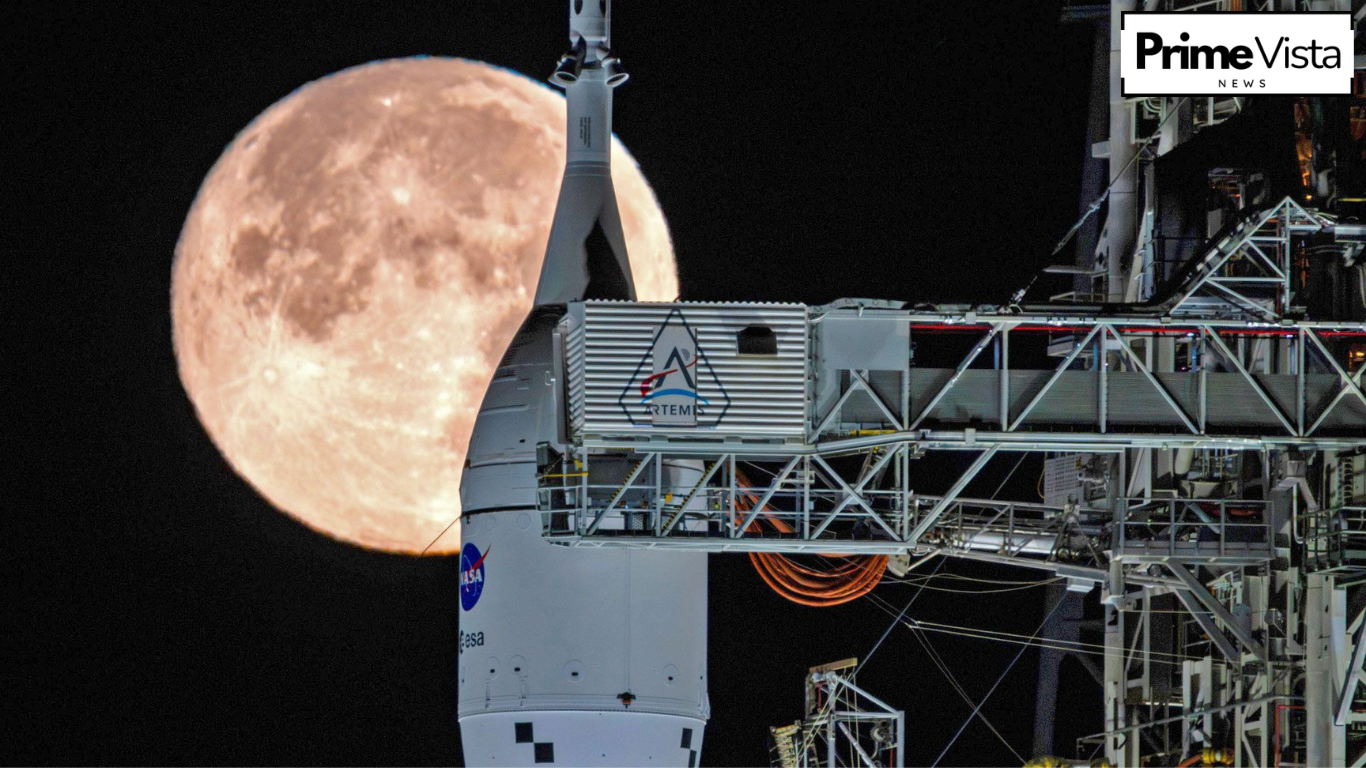
NASA has set March 6 as the earliest possible launch date for Artemis 2, the first crewed mission to the Moon since 1972, following a successful wet dress rehearsal of the Space Launch System rocket.
Washington / Cape Canaveral : NASA has set March 6 as the earliest possible launch date for Artemis 2, the first crewed mission to the Moon in more than five decades, marking a major milestone in the United States’ effort to return humans to deep space.
The Artemis 2 mission will carry four astronauts three from the United States and one from Canada—on a crewed flyby of the Moon, testing systems and procedures critical for future lunar landings under NASA’s Artemis program.
Final Milestones Before Launch
Senior NASA officials cautioned that the March 6 target remains conditional on the successful completion of several key steps, including final pad preparations, a flight readiness review, and a detailed assessment of recent launch rehearsal data.
“We need to successfully navigate all of those,” said Lori Glaze, a senior official with the US space agency. “But assuming that happens, it puts us in a very good position to target March 6.”
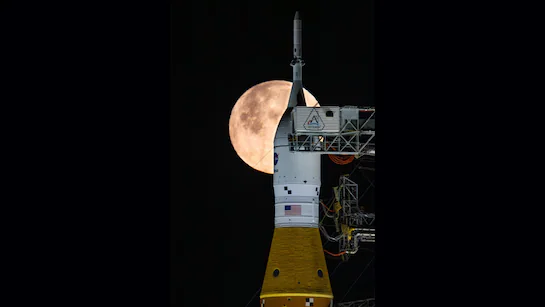
NASA conducted a full-scale rehearsal of the launch on Thursday, using its powerful Space Launch System (SLS) rocket at Kennedy Space Center in Cape Canaveral, Florida. The exercise marked a significant improvement over an earlier attempt that had to be cut short due to technical problems.
Wet Dress Rehearsal Successfully Completed
The rehearsal, known as a wet dress rehearsal, simulates the final stages of a launch under real-world conditions. The rocket is fully fueled, systems are powered up, and engineers run through countdown procedures exactly as they would on launch day.
NASA confirmed that Thursday’s rehearsal proceeded as planned, with the countdown reaching T-minus 29 seconds before being intentionally halted.
“This rehearsal allows us to validate hardware, software, and procedures under launch conditions,” NASA officials said, adding that the successful run provided critical data needed for final mission clearance.
Earlier Setbacks Delayed Timeline
An earlier wet dress rehearsal attempt in early February was cut short after engineers detected technical issues, including a liquid hydrogen leak. The setback forced NASA to delay launch hopes for February and conduct additional inspections and repairs.
Liquid hydrogen, while highly efficient as rocket fuel, is notoriously difficult to manage due to its extreme volatility. NASA engineers addressed the issue before attempting the rehearsal again.
Thursday’s successful test restored confidence in the readiness of both the rocket and ground systems.
Earlier Coverage : After Supreme Court Ruling, Questions Mount Over $133 Billion Raised Through Trump-Era Tariffs
A Historic Mission
Artemis 2 will be the first time humans travel beyond low-Earth orbit since NASA’s Apollo 17 mission in 1972. While the mission will not land on the Moon, it is designed to thoroughly test the Orion spacecraft and life-support systems in deep-space conditions.
The four-member crew will orbit the Moon and return to Earth, paving the way for Artemis 3, which aims to land astronauts on the lunar surface later this decade.
NASA has positioned the Artemis program as a cornerstone of long-term exploration goals, including establishing a sustained human presence on the Moon and preparing for future crewed missions to Mars.
International Collaboration
The inclusion of a Canadian astronaut highlights the international nature of the Artemis program. Canada is a key partner, contributing advanced robotics and technology, including the Canadarm3 robotic system planned for NASA’s future lunar Gateway space station.
NASA officials have repeatedly emphasized that Artemis is not just a return to the Moon, but a foundation for sustained exploration with global partners.
Cautious Optimism at NASA
Despite the positive developments, NASA officials stressed that spaceflight remains inherently complex and that timelines can shift if safety concerns arise.
“March 6 is our earliest opportunity,” officials said, underscoring that safety and mission assurance remain the agency’s top priorities.
If launched as planned, Artemis 2 will represent a historic moment in human spaceflight reopening the path to the Moon after more than half a century and ushering in a new era of exploration.