















Jasprit Bumrah holds the door as India edge England by 7 runs to reach T20 World Cup 2026 final !
Prime Vista News
India booked their place in the T20 World Cup 2026 final after a thrilling seven-run victory over England in a high-scoring semifinal, where nearly 500 runs were scored across 40 overs. While Sanju Samson’s blistering 89 off 42 balls earned him the Player of the Match award, a deeper look at the contest suggests that Jasprit Bumrah’s spell was the decisive factor in India’s narrow win.
On a night dominated by batting fireworks, Bumrah’s calm and precise spell at crucial stages of the chase ultimately ensured that India’s towering total remained just out of England’s reach.
India’s batting fireworks built the platform
India’s total of 253/7 was built on an aggressive and well-paced batting performance that maintained pressure on England throughout the innings.
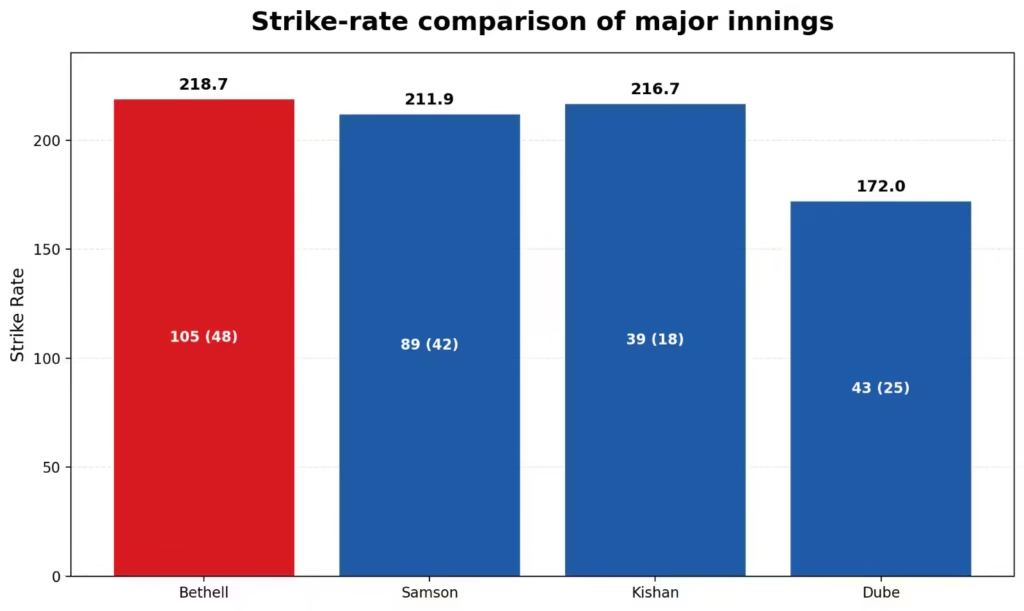
Sanju Samson anchored the innings with a superb 89 off 42 balls, combining power hitting with clever strike rotation. His innings provided the backbone of India’s total and ensured the scoring rate remained high through the middle overs.
Samson also received strong support from other batters who kept the momentum alive.
- Ishan Kishan smashed 39 off 18 balls during the powerplay phase.
- Shivam Dube added 43 off 25 deliveries, keeping the scoring rate above 12 runs per over.
- Late cameos from Hardik Pandya (27 off 12) and Tilak Varma (21 off 7) ensured India finished with a flourish.
Rather than relying on a single partnership, India maintained relentless scoring across different phases of the innings. The cumulative effect of these contributions pushed the total beyond the psychological 250 mark, creating immediate pressure on England’s batting lineup.
England’s chase never collapsed
Despite the daunting target, England’s response ensured the contest remained thrilling until the final overs.
England eventually finished on 246/7, scoring at a rate of 12.30 runs per over, only slightly below the required rate of 12.65.
The driving force behind England’s chase was Jacob Bethell, who delivered a sensational knock of 105 off 48 balls. His innings kept England firmly in the contest and threatened to turn the match into one of the greatest chases in T20 World Cup history.
Even deep into the chase, England remained within striking distance.
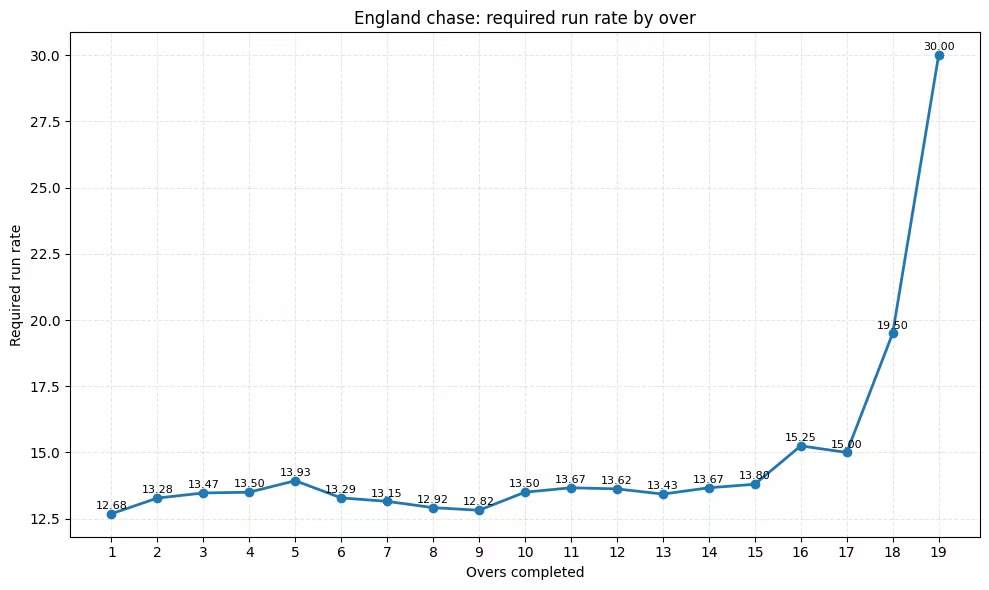
After 15 overs, England stood at 185/5, needing 69 runs from 30 balls. With Bethell in devastating rhythm and the match already witnessing extraordinary scoring, the required rate of 13.8 runs per over looked demanding but still achievable.
The most important hinge for India: Jasprit Bumrah
In a match dominated by batters, the numbers highlight Jasprit Bumrah as the bowler who ultimately shaped the result.
His figures 4 overs, 33 runs, 1 wicket appear modest at first glance. But within the context of the match, they become remarkable.
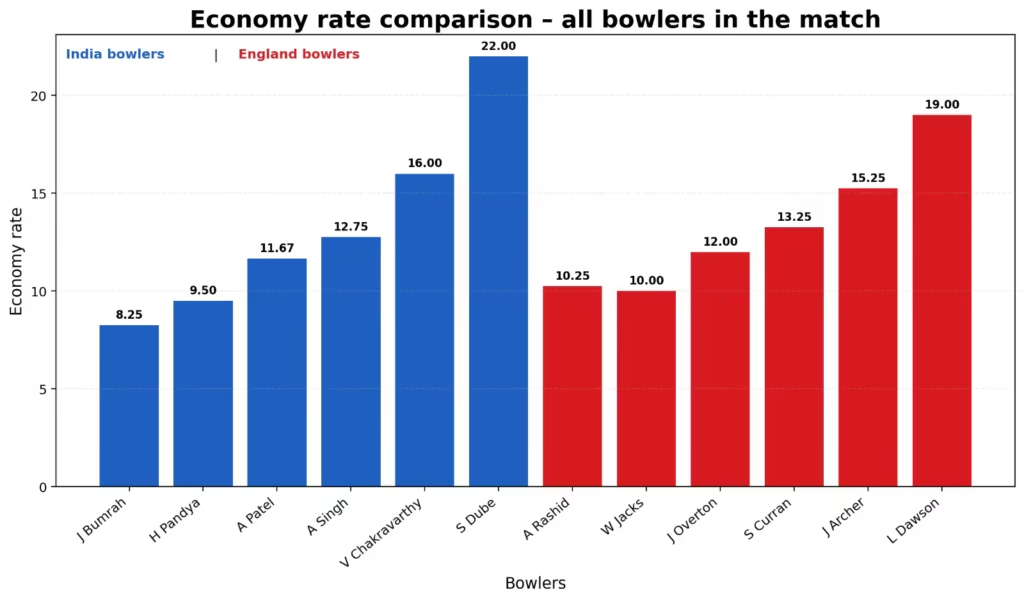
While England scored at 12.30 runs per over overall, Bumrah conceded runs at just 8.25 runs per over. That means he operated more than four runs below the match’s scoring rate.
Across his four overs, this represents roughly 16 runs suppressed compared with the match tempo. Considering India eventually won by only seven runs, that margin becomes decisive.
No other Indian bowler managed to exert the same level of control in a game where boundaries flowed freely.
The overs that changed the chase
Bumrah’s impact becomes even clearer when examining the moments he bowled.
Start of the 16th over
England: 185/5
Target equation: 69 runs off 30 balls
Required rate: 13.80
Bumrah conceded just 8 runs, immediately shifting the equation to 61 runs from 24 balls and pushing the required rate above 15 runs per over.
Start of the 18th over
England: 209/5
Target equation: 45 runs off 18 balls
Once again, Bumrah delivered under pressure, conceding only 6 runs. The equation quickly became 39 runs from the final 12 balls, pushing the required rate to 19.5 runs per over.
In practical terms, those two overs pushed the chase beyond England’s reach.
A ‘Hodor moment’ in cricket terms
Bumrah’s performance resembled the iconic “Hold the Door” scene from the fantasy drama Game of Thrones.
In that memorable moment, the character Hodor sacrifices himself to block pursuing enemies and allow others to escape.
Similarly, Bumrah’s spell acted as the barrier that prevented England’s batting charge from breaking through. At the precise moments when England needed acceleration, he held the line.
Suppressing momentum in a high-scoring match
Another way to interpret Bumrah’s contribution is through run suppression relative to the overall scoring rate.
If he had conceded runs at the match scoring rate of 12.30 per over, his four overs would have gone for approximately 49 runs. Instead, he conceded just 33 runs.
That difference of 16 runs effectively explains why Bethell’s remarkable century was not enough to take England across the finish line.
The difference between building and defending
None of this diminishes Samson’s outstanding innings.
His 89 off 42 balls built the attacking platform that lifted India to a massive total and forced England to chase aggressively from the start.
But in matches where both teams score at extraordinary rates, the decisive moments often belong to bowlers who can briefly interrupt that flow.
Earlier Report : Sanju Samson or Jasprit Bumrah: Who Was the True Player of the Match?
Samson built the total that gave India a chance to reach the final.
Bumrah ensured that total proved just out of England’s reach.
Related Posts