












India Expands Critical Minerals Talks With Canada, France and Brazil to Reduce China Dependence :
PRIME VISTA NEWS
India is in talks with Canada, France, Brazil and the Netherlands to secure lithium and rare earth supplies, aiming to reduce reliance on China and strengthen critical mineral supply chains.
Beyond China: India in Talks With Canada, France and Others to Secure Critical Minerals:
India is intensifying efforts to diversify its supply of critical minerals, holding discussions with Canada, France, Brazil and the Netherlands to jointly explore, extract, process and recycle key raw materials essential to its energy transition and industrial expansion, according to sources familiar with the matter.
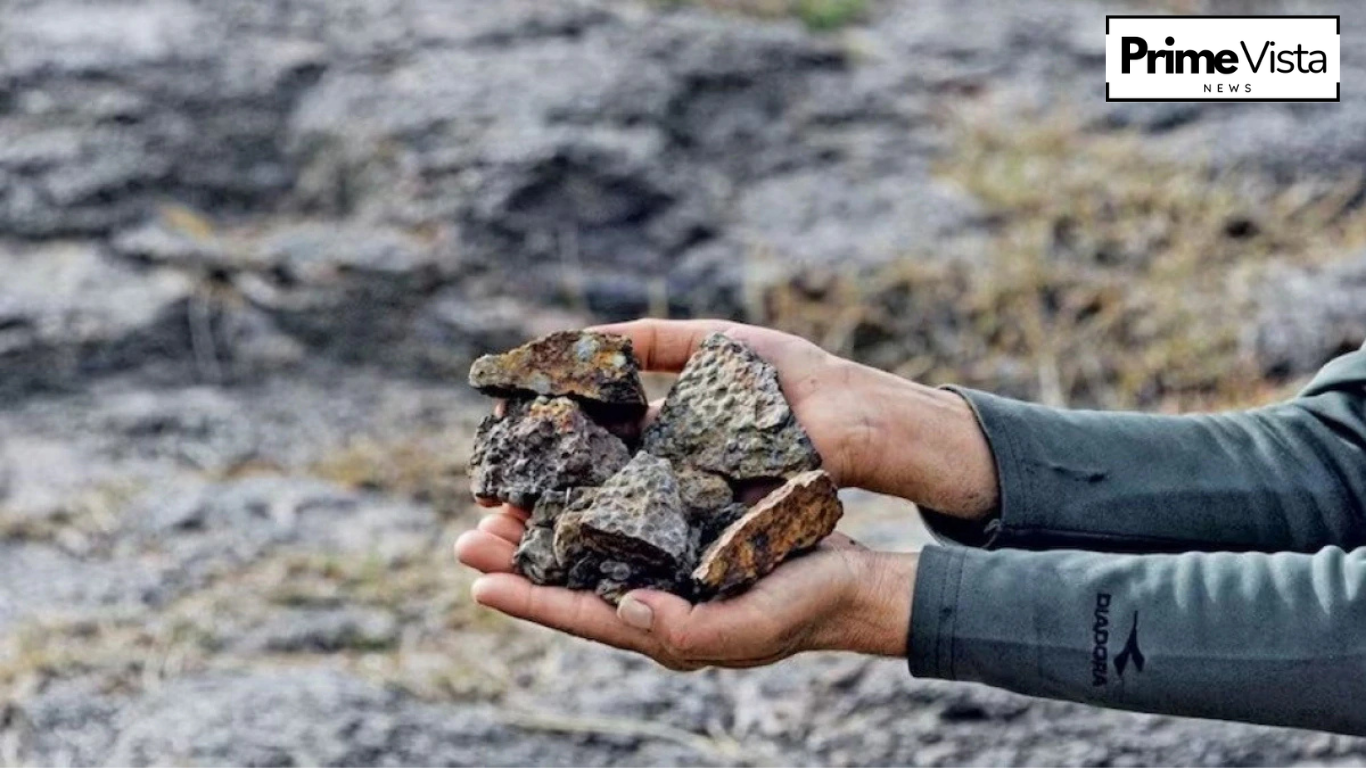
The talks are centred on lithium and rare earth elements materials fundamental to electric vehicles, renewable energy storage, electronics and advanced manufacturing. India is also seeking access to mineral processing and refining technologies, a segment of the value chain currently dominated by China.
Sources describe the negotiations as confidential and at a preliminary stage. However, they signal a broader strategic shift as New Delhi attempts to reduce vulnerabilities linked to supply chain concentration and geopolitical risk.
Reducing Strategic Dependence
China has built extensive mining and refining infrastructure over several decades and controls a significant share of global processing capacity for rare earth elements. That dominance has created supply chain dependencies for many economies, including India.
As India accelerates its clean energy transition and expands domestic manufacturing under industrial growth initiatives, access to stable supplies of lithium, cobalt, nickel and rare earths has become central to long-term planning.
In 2023, India officially classified more than 20 minerals as “critical”, identifying them as essential for energy security, infrastructure, high-technology industries and climate objectives. The designation underscored growing concern within government circles over exposure to external supply disruptions.
Long-Term Investment Cycle
Industry experts caution that securing mineral resources is not an immediate solution. Exploration can take five to seven years, and many projects never reach commercial viability. Even when viable deposits are identified, development requires large capital investments, environmental clearances and logistical infrastructure.
Processing and refining present additional challenges. While raw mineral extraction is geographically distributed, refining capacity is heavily concentrated, particularly in China. Analysts say building domestic capabilities will require sustained policy support and technological partnerships.
India’s current discussions reportedly aim to combine resource access with technology transfer, reducing reliance not only on imported raw materials but also on foreign-controlled processing systems.
Modelled on Germany Framework
Officials are understood to be drawing on elements of a cooperation framework signed with Germany in January. That agreement covers exploration, processing, recycling and joint acquisition of mineral assets both within partner nations and in third countries.
The arrangement is viewed as a template that integrates long-term supply security with technology sharing a structure policymakers believe could be replicated with other partners.
Sources indicated that Canadian Prime Minister Mark Carney is expected to visit India in early March. Discussions may include cooperation in uranium, energy, critical minerals and artificial intelligence. There has been no official confirmation from Ottawa or from representatives of France, Brazil or the Netherlands regarding formal agreements.
Broader Global Context
India’s outreach forms part of a wider global effort to diversify mineral supply chains. In recent years, New Delhi has signed agreements with Argentina, Australia and Japan, while also holding discussions with Peru and Chile.
International concern over supply concentration has intensified. Last month, finance ministers from major economies met in Washington to explore strategies aimed at reducing collective dependence on rare earth supplies controlled by a single country.
For India, the strategy is both economic and strategic. Ensuring access to critical minerals supports domestic manufacturing ambitions while strengthening resilience against external shocks.
Strategic Imperative
Experts say long-term success will depend on parallel investments in domestic refining, recycling and technological innovation. Without strengthening these segments, overseas acquisitions alone may not sufficiently reduce dependency risks.
As global competition for mineral resources accelerates, India’s expanding diplomatic engagement reflects an effort to position itself as a secure participant in the next phase of global industrial transformation.
The negotiations remain at an early stage. But taken together, they represent a clear signal: India is seeking to reshape its critical mineral strategy beyond traditional supply corridors and toward a more diversified, partnership-driven model.