













‘How Are We a Burden on Canada?’ Millions, Mostly Punjabis, at Risk as Temporary Work Permits Expire by 2026 !
Prime Vista News
Millions of temporary residents in Canada, many from Punjab, face uncertainty as work permits expire by 2026 amid Ottawa’s plan to reduce temporary migration and tighten permanent residency pathways.
A growing number of temporary residents in Canada are voicing anxiety and frustration as millions of work permits are set to expire over the next two years, coinciding with a significant shift in Ottawa’s immigration strategy.
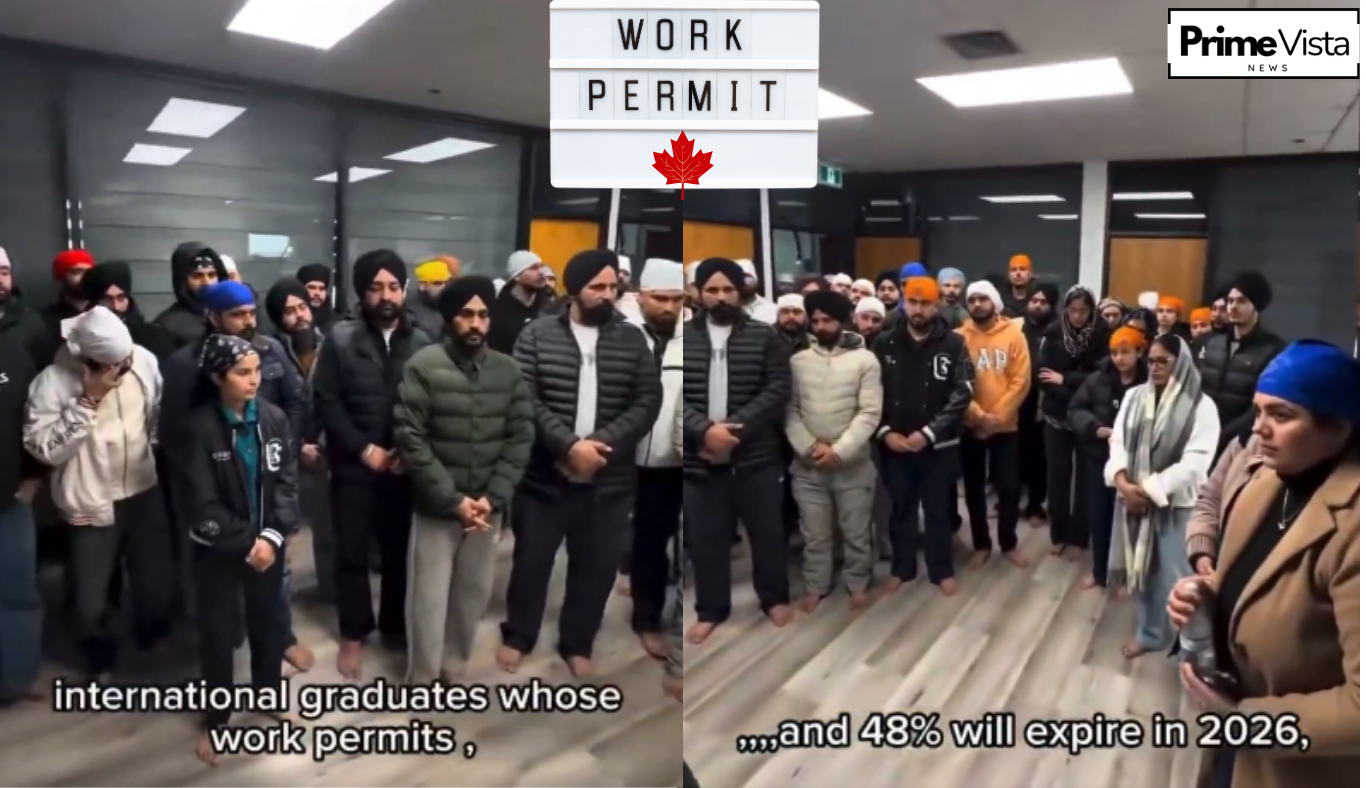
A video circulating widely on social media in recent days shows a group of temporary residents — many of them Punjabi international graduates and skilled workers — questioning government policy and asking why they are being asked to leave after years of working, studying and paying taxes in Canada. The video has struck a chord with similar permit holders across the country, many of whom now face uncertain futures.
At the heart of the issue is a sharp rise in expiring temporary resident permits. Immigration analysts estimate that nearly 2.9 million permits will expire across 2025 and 2026, cutting across multiple streams including employer-specific work permits, open work permits and post-graduation work permits (PGWPs).
Policy Shift Tightens the Window
This wave of expiries comes as the federal government moves to reduce the share of temporary residents from roughly 7 per cent of Canada’s population to 5 per cent by 2027. The shift reflects growing public concern about housing shortages, infrastructure pressure and the rapid pace of population growth — but it has also narrowed pathways to permanent residency for those already in the country.
According to available data, approximately 1.05 million temporary work permits expired in 2025, with an additional 927,000 expected to lapse in 2026. Without extensions, many permit holders risk falling out of legal status if they are unable to secure new authorisation or transition to permanent residency.
For many affected individuals, the timing feels abrupt.
“These are people who followed the rules, invested heavily in education, filled labour gaps and built lives here,” said one immigration consultant familiar with the issue. “The concern is not just about numbers — it’s about what happens to people who were encouraged to come and now face a closing door.”
Community Concerns Grow
Punjabis are among the most visible voices in the debate, reflecting their large presence among international students and temporary workers, particularly in provinces such as Ontario, British Columbia and Alberta. Many have worked in sectors experiencing chronic labour shortages, including health care, trucking, construction, manufacturing and information technology.
Community advocates argue that extending work permits, even temporarily, would allow Canada to retain experienced workers while easing labour shortages. They also point out that abrupt exits could disrupt employers and local economies already grappling with workforce gaps.
In the viral video, participants repeatedly ask why long-term contributors are now being portrayed as a burden. “We paid fees, rent, taxes. We worked during shortages,” one speaker says. “Why are we being told there’s no place for us now?”
Government Response Remains Limited
Immigration, Refugees and Citizenship Canada (IRCC) has acknowledged processing backlogs and system pressures, particularly as application volumes surged following the pandemic. However, the department has not announced any broad national extension programme for expiring work permits.
Instead, IRCC has emphasised that immigration policy must balance economic needs with housing capacity, public services and social cohesion. Officials have reiterated that temporary residence, by definition, does not guarantee permanent status a point that has drawn criticism from those who say expectations were set differently during recruitment drives.
Earlier Coverage : 57-Year-Old Sikh Man Avtar Singh Reported Missing in California; Police Probe Suspected Abduction, Review CCTV Footage
Uncertain Road Ahead
For now, many temporary residents are exploring limited options: employer sponsorship, provincial nominee programmes, or shifting to visitor status while awaiting clarity. Others are preparing for the possibility of leaving Canada altogether, despite years of investment.
Immigration analysts warn that without clearer communication and transitional policies, Canada risks losing skilled workers it spent years attracting. At the same time, political pressure to slow population growth remains strong.
As permit expiry deadlines approach, calls for greater transparency, targeted extensions and fair transition pathways are growing louder not just from Punjabis, but from temporary residents across the country.