












Cabinet Approves Rs 5,983-Crore Delhi–Ambala Rail Expansion to Boost Capacity and Strategic Connectivity :
Cabinet clears Rs 5,983 crore Delhi–Ambala rail expansion, adding third and fourth lines to improve capacity, defense logistics and passenger services.
PRIME VISTA NEWS
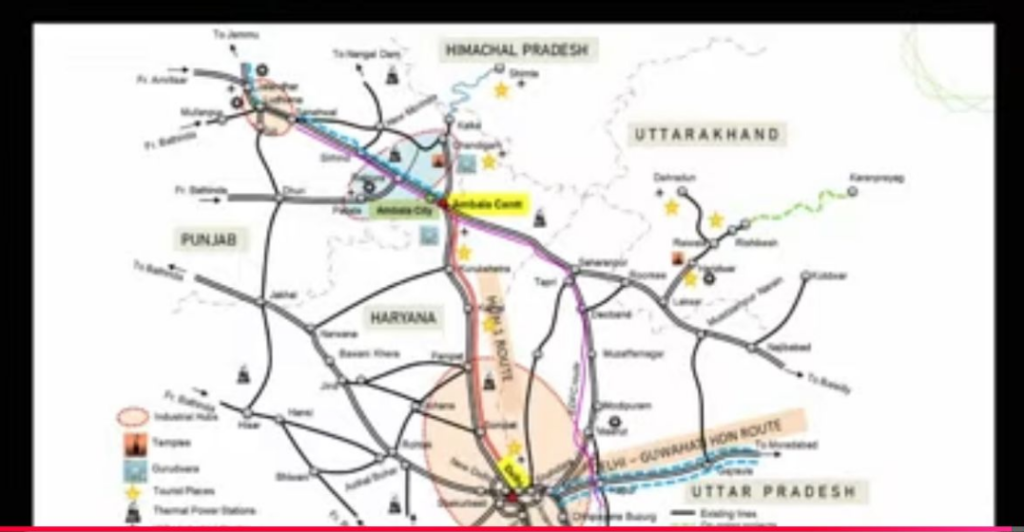
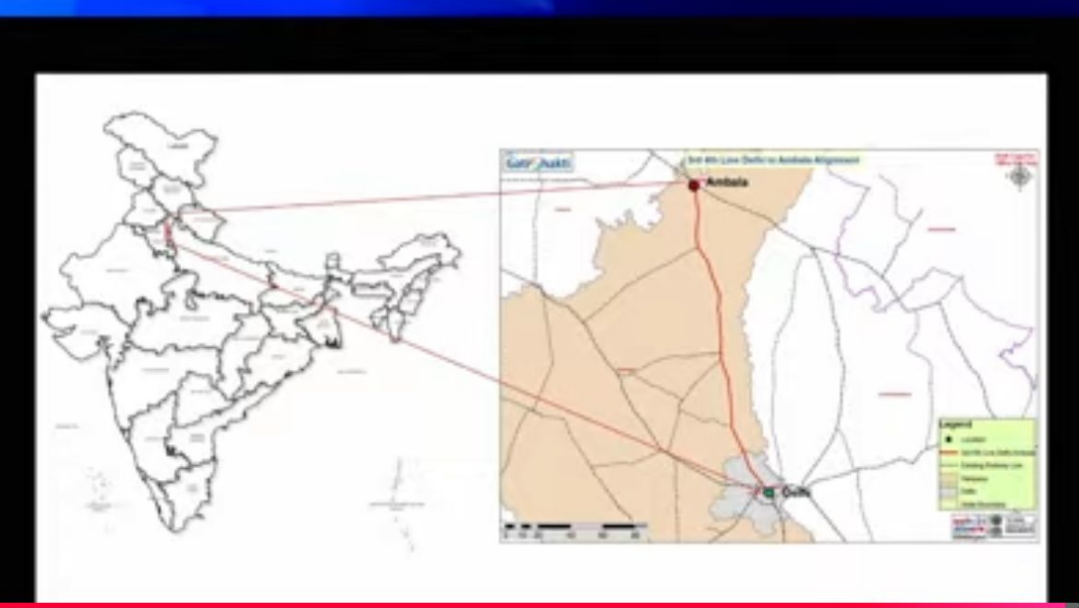
The Cabinet Committee on Economic Affairs (CCEA), chaired by Prime Minister Narendra Modi, has approved the construction of third and fourth railway lines on the Delhi–Ambala section, a 194-kilometre stretch considered one of northern India’s busiest rail corridors. The project has been sanctioned at an estimated cost of Rs 5,983 crore.
The decision forms part of a broader railway infrastructure package worth Rs 18,509 crore cleared at the latest Cabinet meeting. Alongside the Delhi–Ambala expansion, the government also approved third and fourth line projects on the Kasara–Manmad and Bellary–Hosapete routes, aimed at increasing capacity and easing congestion across key passenger and freight corridors.
Strategic Importance of the Corridor
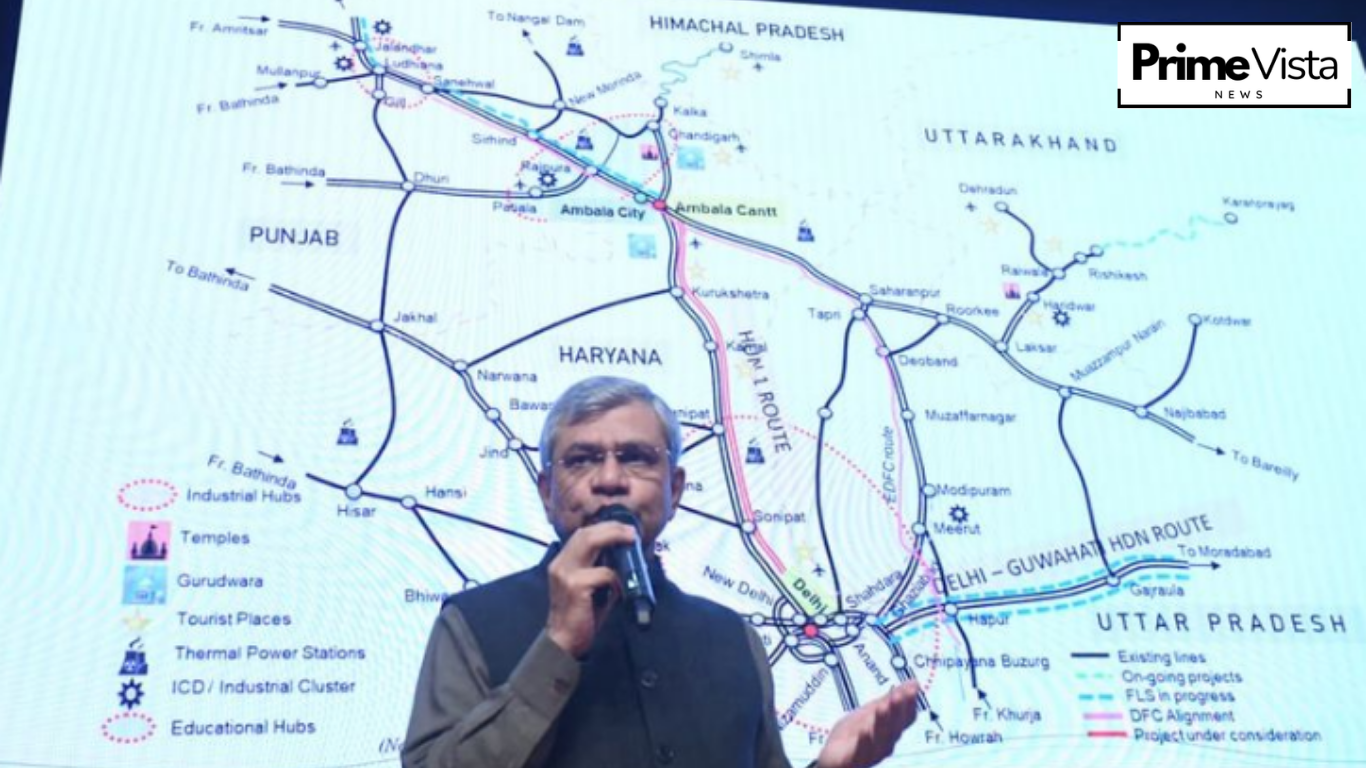
The Delhi–Ambala rail section plays a critical role in both civilian and strategic operations. The route handles dense passenger traffic and connects the national capital to major cities including Chandigarh and onward to Jammu. It also serves as an important link for defence logistics.
Information and Broadcasting Minister Ashwini Vaishnaw said the expansion would strengthen troop mobility from Delhi towards Jammu, passing through key districts such as Sonepat, Panipat and Kurukshetra in Haryana. Officials indicated that adding additional lines would significantly improve operational flexibility, especially on high-density routes where scheduling constraints frequently lead to delays.
Railway authorities have long identified the corridor as operating near saturation during peak hours. The addition of two more lines is expected to separate freight and passenger traffic more efficiently, reduce waiting times and enhance service reliability.
Infrastructure Details and Timeline
According to official statements, the project is expected to be completed within four years. The government has stated that the expansion will not require major land acquisition, a factor that could help avoid delays commonly associated with large-scale infrastructure projects.
The scope of work includes the construction of one major bridge and 28 additional bridges, along with the rehabilitation of existing bridges along the alignment. Officials said the multi-tracking initiative will enable smoother train movement and better timetable management across the section.
The Delhi–Ambala project is part of Indian Railways’ broader strategy to enhance line capacity on heavily used routes through multi-tracking. Once completed, the three newly approved projects will collectively add approximately 389 kilometers to the railway network across 12 districts in Delhi, Haryana, Maharashtra and Karnataka.
Environmental and Economic Impact
The government has highlighted environmental gains linked to the expansion. Minister Vaishnaw said improved rail capacity could reduce carbon dioxide emissions by an estimated 43 crore kilograms annually by encouraging a modal shift away from more polluting forms of transport.
The construction phase is also expected to generate significant employment. Officials estimate that the project will create around 132 lakh man-days of work, providing a boost to local economies in the affected regions.
In addition to capacity gains, officials argue that enhanced rail infrastructure contributes to long-term economic growth by improving freight movement efficiency and reducing logistical bottlenecks.
Cabinet Meeting and Administrative Transition
The approvals were granted during what officials described as the final Cabinet meeting held at South Block, ahead of the government’s transition to newly constructed administrative complexes, including Kartavya Bhavan and Seva Teerth.
A Cabinet resolution adopted during the meeting noted the historical context of the North and South Blocks, originally constructed during the colonial period. The resolution stated that the relocation of ministries to modern office complexes is intended to improve administrative efficiency and employee productivity.
In Earlier Coverage: Government Informed Lok Sabha Rs 762 Crore Was Spent on PM Narendra Modi’s Foreign Visits Over 10 Years.
Broader Infrastructure Push
The approval of the Delhi–Ambala expansion underscores the government’s continued focus on railway modernisation and network expansion. Multi-tracking of high-density routes has been identified as a key strategy for improving mobility, strengthening national security logistics and enhancing passenger experience.
Officials maintain that with a defined completion timeline and limited land acquisition requirements, the project is positioned to deliver measurable improvements in service reliability and operational efficiency.
As Indian Railways continues to expand capacity on critical corridors, the Delhi–Ambala project is expected to play a central role in easing congestion and supporting long-term regional connectivity.