












After Supreme Court Ruling, Questions Loom Over $133 Billion Collected From Trump-Era Tariffs !
Prime Vista News
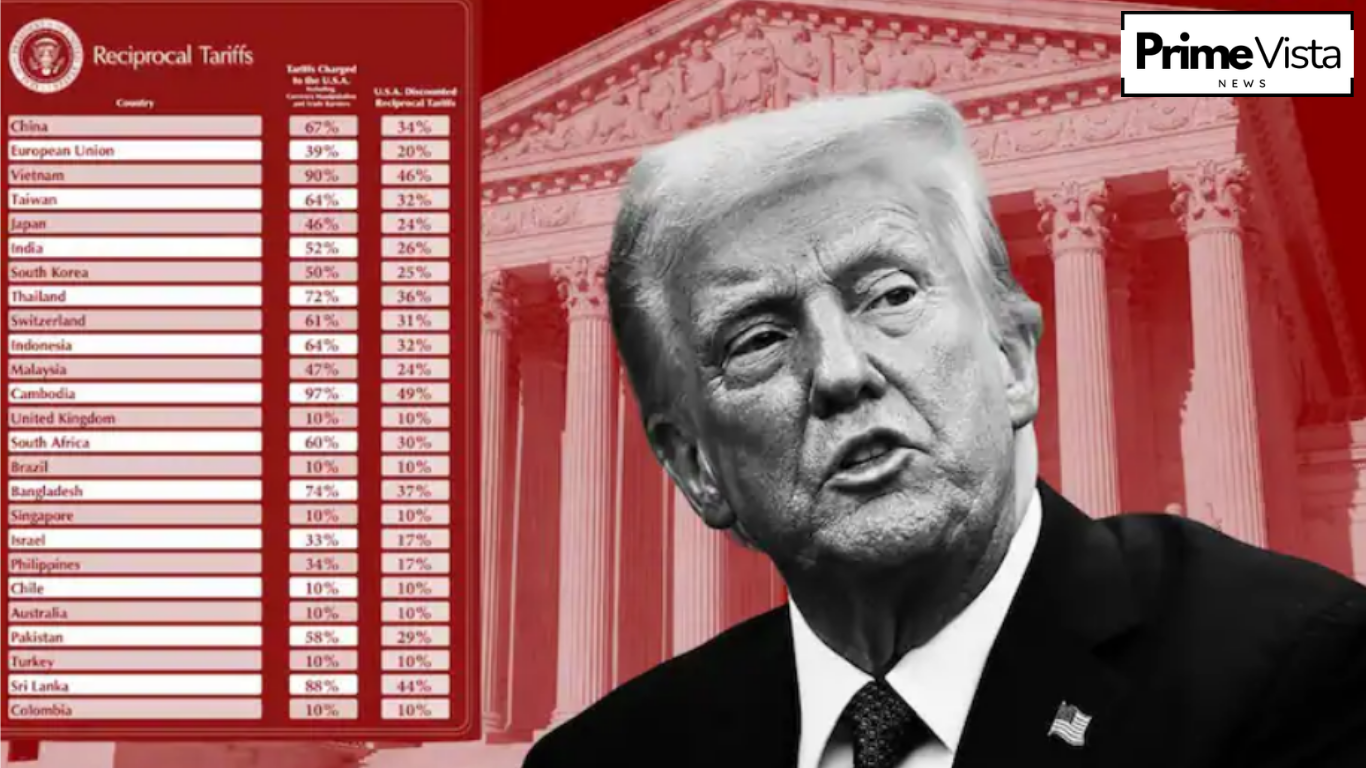
The US Supreme Court’s decision to strike down Donald Trump’s sweeping tariffs has raised major questions over the fate of $133 billion already collected in import duties, with uncertainty over refunds for companies and consumers.
Washington:
The US Supreme Court’s decision to strike down former President Donald Trump’s sweeping emergency tariffs has delivered a major blow to one of the most consequential economic policies of his administration. However, while the ruling invalidated the tariffs, it left unresolved a critical question: what happens to the estimated $133 billion already collected from importers under levies now deemed unlawful?
The ruling has triggered political backlash, legal uncertainty, and growing concern among businesses, consumers, and state governments over whether and how those funds will be returned.

States and Companies Demand Accountability
Following the judgment, Illinois Governor JB Pritzker sent a formal letter to Trump demanding nearly $9 billion in tariff-related compensation for families in his state. The governor argued that the tariffs imposed significant financial strain on households, farmers, and businesses.
“Your tariff taxes wreaked havoc on farmers, enraged our allies, and sent grocery prices through the roof,” Pritzker wrote, warning that further legal action could follow if compensation was not forthcoming.
According to estimates cited in the letter, the average US household paid approximately $1,700 in tariff-related costs last year, based on assessments by academic economists. Pritzker’s demand translates to roughly that amount per Illinois household.
Companies, too, are seeking reimbursement. Several major corporations had already filed lawsuits demanding refunds even before the Supreme Court ruling, positioning themselves early in anticipation that the tariffs could be overturned.
Consumers Unlikely to Receive Direct Refunds
Despite widespread consumer impact, analysts and officials suggest that ordinary Americans are unlikely to receive direct refunds. Although higher import costs were passed on through increased prices, the tariffs themselves were paid by importers not consumers under US customs law.
Officials familiar with the issue told Prime Vista News that any refunds, if ordered, would almost certainly go to companies rather than households. US Treasury Secretary Scott Bessent has publicly expressed skepticism that consumers would ever see direct compensation.
The scale of potential repayments is vast. The Penn-Wharton Budget Model has estimated that total refunds could reach as high as $175 billion, depending on how the process is structured and who qualifies.
Trump Acknowledges Years of Litigation Ahead
Trump himself acknowledged that resolving the issue could take years. Speaking to reporters after the ruling, he conceded that any refund process would likely be tied up in prolonged litigation.
“I guess it has to get litigated for the next two years,” Trump said. “We’ll end up being in court for the next five years.”
The comments mark a sharp contrast to Trump’s earlier campaign claims that Americans would eventually receive rebate checks due to what he described as massive tariff revenue inflows.
Earlier Coverage : Trump Says India Trade Deal Intact After Tariff Setback, Reiterates Claims on Russia Oil and Pakistan
Supreme Court Warns of a ‘Mess’
In a dissenting opinion, conservative Justice Brett Kavanaugh who was appointed by Trump highlighted the uncertainty left by the ruling. He noted that the court had not addressed whether the government must return the money, nor how such a process would work.
Kavanaugh warned that the refund process was likely to be a “mess,” echoing language used during earlier hearings by Justice Amy Coney Barrett, who sided with the majority.
According to US Customs data, approximately $133 billion in tariffs had been collected by mid-December. While the agency has an established system for refunding duties collected in error, experts say it was never designed to handle claims of this scale.
No Precedent for Refunds of This Size
Legal experts told Prime Vista News that while courts have previously ordered refunds in trade disputes, there is no precedent for processing tens of billions of dollars involving thousands of importers simultaneously.
In the 1990s, US courts struck down a harbor maintenance fee on exports and created a mechanism for exporters to apply for refunds. However, that process was far smaller and far less complex than the current situation.
Trade lawyers say any refund framework is likely to involve multiple institutions, including US Customs and Border Protection, the US Court of International Trade in New York, and lower federal courts.
Importers Brace for a Long Fight
Despite the uncertainty, trade lawyers expect that importers will eventually receive at least partial refunds.
“It’s going to be a bumpy ride for a while,” one senior trade attorney told Prime Vista News, adding that courts and agencies will struggle to manage the scale and complexity of the claims.
Others argue that administrative difficulty does not justify the government retaining money collected unlawfully. Legal experts say the decisive nature of the Supreme Court ruling strengthens the case for some form of restitution.
Some companies—including major retailers, manufacturers, and food producers have already initiated legal action, while others are expected to follow. Additional lawsuits could also emerge between manufacturers and suppliers over who ultimately bears responsibility for tariff-related price increases.
An Uncertain Road Ahead
With billions of dollars at stake, the ruling has opened the door to years of legal and political battles. While the Supreme Court struck down the tariffs themselves, the question of refunds now shifts to lower courts and federal agencies.
For businesses and state governments, the fight is just beginning. For consumers, the likelihood of direct compensation remains slim. And for policymakers, the episode underscores the far-reaching consequences and legal risks of sweeping trade actions enacted under emergency powers.