













India vs South Africa Knockout : Pressure Exposes India’s Key Weaknesses !
Prime Vista News
India’s knockout loss to South Africa reveals over-reliance on key bowlers, selection uncertainty, and batting fragility under high-pressure T20 conditions.
Knockout cricket has a way of stripping teams down to their essentials. There is no room for recovery, no second chances, and little tolerance for imbalance. India’s defeat against South Africa was not merely a result that ended a campaign; it was a revealing examination of structural and psychological gaps that surface only under sudden-death pressure.
On a pitch that demanded discipline and sustained control through the middle overs, India once again leaned heavily on Jasprit Bumrah and Arshdeep Singh. The duo delivered spells of high quality, combining pace, movement, and clarity of execution. However, beyond them, the bowling attack struggled to apply consistent pressure. In knockout matches, brilliance at one end cannot compensate for looseness at the other, and South Africa capitalised on that imbalance.
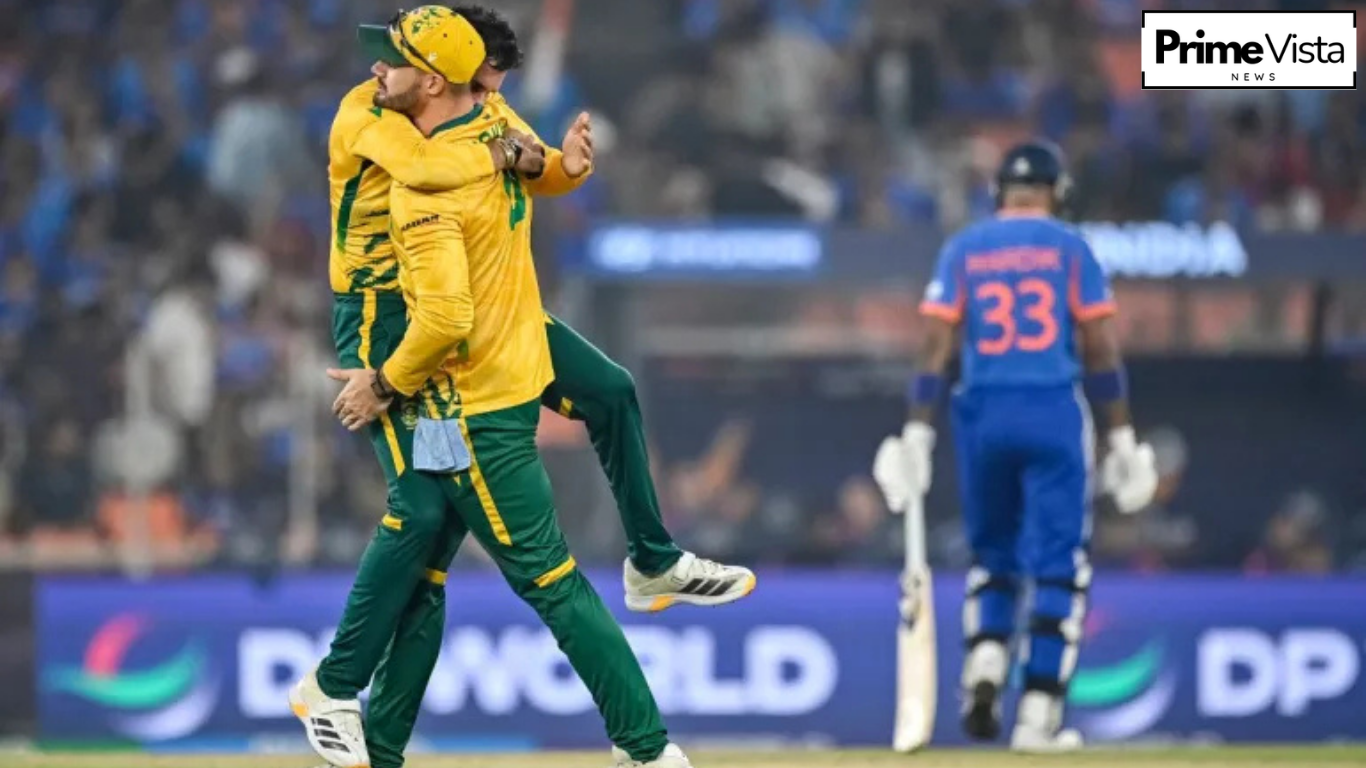
South Africa’s recovery from 20 for 3 to a competitive 187 was a defining phase of the match. Early breakthroughs suggested India had seized control, but the inability to maintain pressure allowed the opposition to rebuild methodically. The middle overs often the decisive window in T20 cricket slipped away as India failed to choke scoring options or force sustained errors.
Selection choices added another layer to India’s challenge. The decision to play Washington Sundar ahead of Axar Patel neither strengthened the bowling attack nor deepened the batting. In high-stakes encounters, teams need players with clearly defined, proven roles. Axar’s left-arm spin provides variation and match-up flexibility, while his lower-order hitting has repeatedly delivered under pressure. Washington’s inclusion appeared more like a safety-first compromise than a tactical call, and such uncertainty often proves costly in knockout scenarios.
South Africa, by contrast, showcased the value of experience and clarity. Once the initial collapse was arrested, their middle order settled into a rhythm that balanced caution with intent. David Miller once again demonstrated why he remains one of the most reliable finishers in white-ball cricket. His innings was not built on reckless power, but on game awareness understanding when to absorb pressure, when to rotate strike, and when to target specific bowlers. What initially appeared to be a below-par total gradually transformed into a challenging score through intelligent shot selection and calm decision-making.
India’s response with the bat never quite found momentum. Early wickets disrupted rhythm and forced the middle order into a rebuilding role, a difficult task in a chase approaching 190. South Africa’s fast bowlers exploited pace and bounce effectively, unsettling India’s top order, while Keshav Maharaj’s disciplined lines smartly shut down Shivam Dube’s preferred hitting zones. With boundaries drying up and the required rate climbing, pressure mounted rapidly.
The middle-overs phase ultimately decided the contest. While powerplay aggression remains important in T20 cricket, knockout matches are often won between overs seven and fifteen. South Africa controlled that phase expertly, squeezing runs and forcing India into riskier options. Partnerships failed to develop, and the chase gradually slipped out of reach despite appearing manageable on paper.
A quieter concern remains the limited exposure for Rinku Singh during the tournament. When he finally arrived at the crease, the situation demanded immediate impact with little margin for error. Finishers rely on rhythm and continuity; being asked to deliver under extreme pressure without sufficient time in the middle is an unfair challenge, even for players with proven temperament. This remains a structural issue rather than an individual failing.
Beyond tactics and personnel, the broader lesson for India lies in understanding the psychological demands of knockout cricket. League matches allow experimentation and recovery. Sudden-death games do not. Every over carries consequence, every decision is magnified, and composure under stress becomes as important as technical skill.
India possesses the talent and depth to challenge any team in world cricket. However, over-reliance on a few match-winners, uncertainty in selection clarity, and vulnerability to early batting pressure remain fault lines that elite opponents will continue to target.
As tournaments progress into their decisive stages, conversations must shift away from potential and reputation. In knockout cricket, those factors hold little weight. Execution, balance, and mental resilience determine outcomes and this match served as a timely reminder of that reality.