












Punjab Defends MP Amritpal Singh’s Detention, Cites Hit List and Terror Links in High Court :
Prime Vista News
Punjab government tells the Punjab and Haryana High Court that MP Amritpal Singh’s preventive detention is justified, citing a 15-member hit list and alleged links with designated terrorists under UAPA.
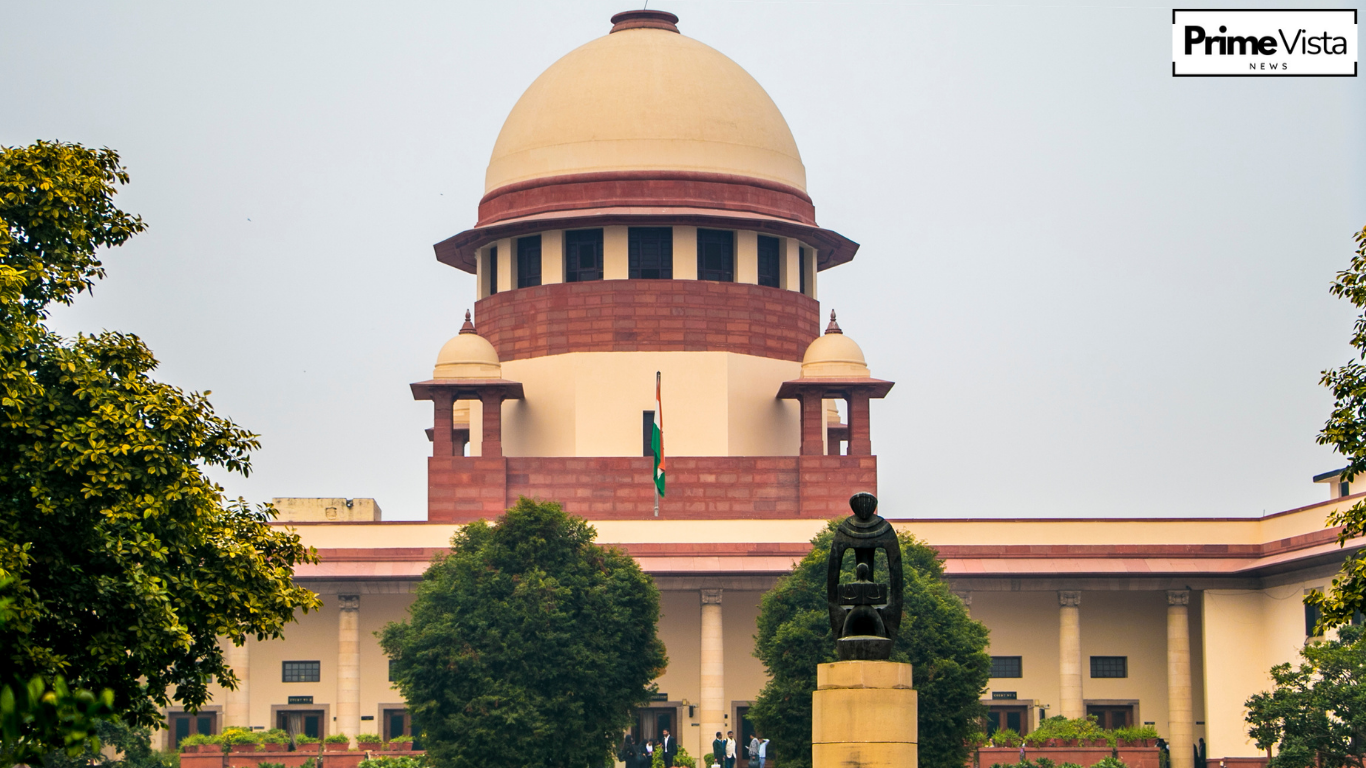
The Punjab Government on Tuesday strongly defended the continued preventive detention of Khadoor Sahib Member of Parliament Amritpal Singh before the Punjab and Haryana High Court, arguing that the gravity of the allegations against him including a purported 15-member “hit list” and alleged links with designated terrorists justified the State’s action.
Appearing before a bench headed by Chief Justice Sheel Nagu, senior advocate Anupam Gupta contended that the detention order was grounded in credible and substantial material. According to the State, the preventive detention was not routine but based on what it described as the magnitude of the threat posed to public order and national security.
“If I were to attempt to describe the grounds of detention in a single line,” Gupta submitted, “that would be the gravity and the enormity of the threat posed by the hit list, and the petitioner’s close intimate association with dreaded terrorists, terrorists and gangsters.”
The Punjab Government told the court that the case rests primarily on two pillars: the alleged existence of a 15-member hit list and Singh’s purported links with designated terrorists, including an individual notified under the Unlawful Activities (Prevention) Act (UAPA).
Referring to documents placed on record, the State submitted that the identities, locations and alleged roles of the 15 individuals named as potential targets had not been factually disputed during arguments. Gupta told the bench that many of those listed were individuals who had publicly criticised or opposed Singh.
The State also relied on a January 9, 2023 notification issued by the Ministry of Home Affairs under the UAPA. The notification designated Arshdeep Singh alias Arsh Dalla as a terrorist and included his name in the Fourth Schedule of the Act.
Reading portions of the notification in court, Gupta said the individual was associated with the Khalistan Tiger Force and had allegedly been involved in serious crimes including murder, extortion, targeted killings and terror-related activities.
In addition, the State referred to witness statements recorded during the course of investigation under the new criminal procedure framework. One such statement, reproduced in the detention grounds, mentioned telephonic communications allegedly facilitated between Singh and others through an encrypted digital platform.
Earlier Report : India Built What No Other Country Has : Macron, Modi Lead AI Impact Summit 2026
The platform, referred to in court as the “Jangi” app, was described by the State as a highly secure communication tool. On instructions, Gupta told the bench that the application was “far more than WhatsApp, completely encrypted,” and that intelligence agencies had not been able to penetrate it.
The bench took note of the submissions and indicated that the matter would continue for further hearing, with the State undertaking to conclude its arguments on the following day.
Singh, who was elected as MP from Khadoor Sahib, has challenged the legality of what he describes as the third successive detention order against him. In his petition, he has argued that there is no credible or fresh material linking him to activities prejudicial to public order or national security.
On his behalf, it was contended that the detention is arbitrary, without jurisdiction and violative of constitutional safeguards under Articles 21 and 22 of the Constitution of India. The petition further states that Singh has remained under preventive detention since April 2023, despite what has been described as the absence of new or supporting evidence to justify continued incarceration.
The case places the court at the intersection of national security considerations and individual liberty a balance that preventive detention laws often test. The High Court is expected to continue hearing detailed arguments from both sides before arriving at a determination.
For now, the matter remains under judicial consideration.