











Nearly One in Five Top Civil Service Posts Vacant, Government Tells Parliament :
Over 2,800 posts in IAS, IPS and IFS remain vacant across India, Parliament informed. IAS alone faces a 20 per cent shortfall in officers.
PRIME VISTA NEWS
More than 2,800 posts across India’s premier civil services the Indian Administrative Service (IAS), Indian Police Service (IPS), and Indian Forest Service (IFS) are currently lying vacant, the Union government informed Parliament, raising fresh concerns over administrative capacity and governance delivery across states and Union Territories.
The data was presented in the Rajya Sabha through a written reply by Minister of State for Personnel, Public Grievances and Pensions, in response to a question on staffing levels in the All India Services. The figures reveal that nearly one in five sanctioned posts in these elite services remains unfilled.
IAS Records the Highest Number of Vacancies
According to the details tabled in Parliament, the Indian Administrative Service has a sanctioned strength of 6,858 officers nationwide. However, only 5,457 officers are currently in position, leaving 1,401 posts vacant. This translates to a vacancy rate of approximately 20.4 per cent, the highest among the three services.
The shortfall in IAS officers has implications for policy implementation, district administration, and coordination between the Centre and states, particularly as governance demands continue to expand in areas such as welfare delivery, infrastructure development, and crisis management.
Significant Gaps in IPS and IFS Cadres
The Indian Police Service, responsible for maintaining law and order and leading policing institutions across the country, is also facing a substantial shortage. Against a sanctioned strength of 4,984 officers, only 4,100 officers are currently serving, resulting in 884 vacant posts, or about 17.7 per cent of the total strength.
Similarly, the Indian Forest Service, which plays a critical role in environmental protection, wildlife conservation, and climate-related governance, is operating below capacity. Of its sanctioned strength of 3,193 officers, 2,644 are in position, leaving 549 posts unfilled, representing a vacancy rate of roughly 17.2 per cent.
Taken together, the figures underline a persistent gap between approved cadre strength and actual deployment across India’s top administrative services.
AGMUT Cadre Most Affected
Cadre-wise data shows uneven distribution of vacancies across states and Union Territories. The AGMUT cadre which covers Arunachal Pradesh, Goa, Mizoram, and Union Territories including Delhi has reported the highest number of vacancies, with 267 posts remaining unfilled.
Uttar Pradesh, the country’s most populous state, follows closely with 215 vacant posts, making it one of the worst-affected large states in terms of civil service staffing. Several other states and UTs also continue to experience shortages, raising concerns about administrative efficiency at both the field and supervisory levels.
GLOBAL WATCH – Budget Blunder? China Briefly Discloses Multi-Million Dollar Funding for US-Born Olympians.
Recruitment Through UPSC Continues Annually
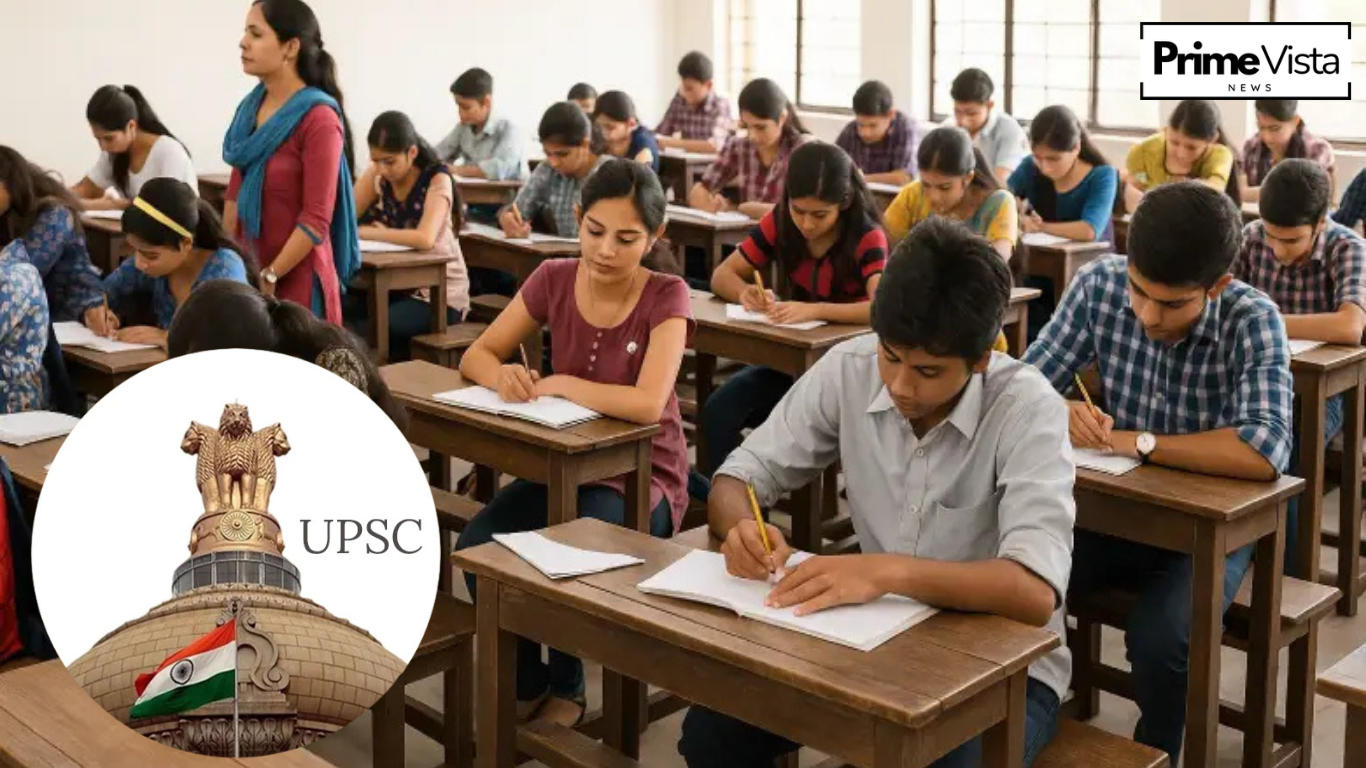
The government clarified that recruitment to the IAS, IPS, and IFS is conducted annually through the Civil Services Examination, administered by the Union Public Service Commission (UPSC). Despite regular recruitment, vacancies persist due to a combination of factors, including retirements, promotions, resignations, attrition, deputations, and periodic increases in sanctioned strength.
Officials noted that the creation of new posts and expansion of governance responsibilities often outpaces the rate at which officers can be inducted and trained, leading to structural gaps within cadres.
Parliamentary Concerns and Government Response
The issue of staffing shortages in the All India Services has been raised repeatedly in Parliament, particularly in the context of growing demands in sectors such as law enforcement, environmental governance, infrastructure execution, disaster management, and social welfare schemes.
The Centre said it periodically reviews cadre strength, recruitment mechanisms, and training capacity in consultation with state governments to address the shortfall. However, no immediate timeline was indicated for closing the existing gap.
As administrative responsibilities continue to grow across states and Union Territories, the persistence of vacancies in the country’s top civil services remains a critical governance challenge.