







Ropar-Highways Choked as Protest Disrupts Traffic Flow:
Prime Vista News
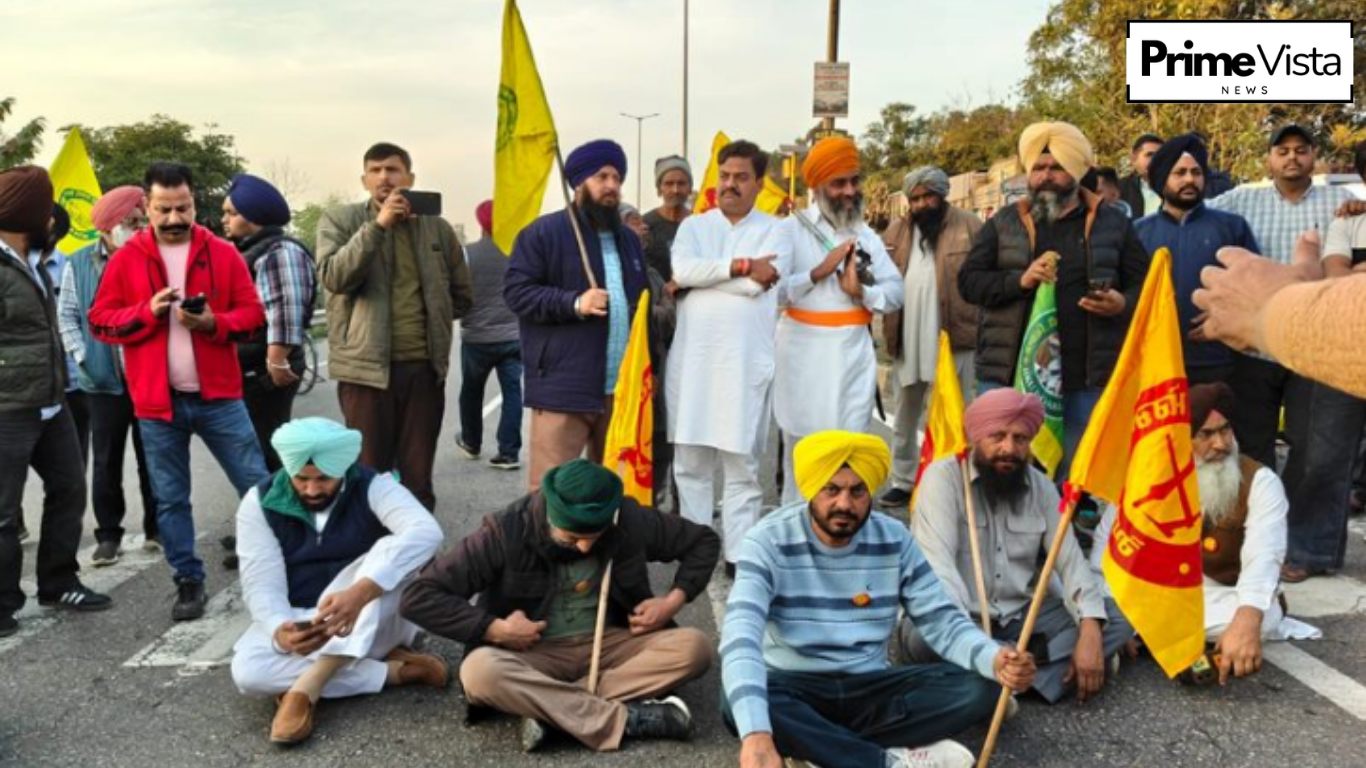
Thousands of commuters across Punjab’s Ropar district faced severe inconvenience on Friday after a protest by the Kirti Kisan Union near Bunga Sahib led to widespread traffic disruption on major highways and arterial roads. The dharna, organised in opposition to the visit of the Ravi Beas Tribunal to Nangal, resulted in long traffic jams, leaving vehicles stranded for hours and bringing daily life to a near halt in several areas.
The most affected stretch was the busy Ropar–Anandpur Sahib road, where vehicular movement came to a complete standstill for extended periods. Commuters travelling between religious centres, industrial areas, and nearby towns were forced to wait for hours with little information on when traffic would resume.
In addition to this key route, traffic was also severely impacted on the Ropar–Nangal road and the Manali–Ropar highway, both of which are crucial links for local commuters as well as long-distance travellers. Long queues of cars, buses, trucks, and two-wheelers were reported on the Nurpur–Ropar road and other connecting routes passing through the district.
Commuters Stranded for Hours
Many commuters reported being stuck in traffic for several hours, with little to no movement. Families travelling with children, elderly passengers, and patients en route to hospitals were among those most affected.
“I was travelling to Anandpur Sahib with my parents for a religious visit, but we were stuck on the highway for nearly three hours,” said a commuter. “There was no police officer to guide traffic, and no information on alternate routes.”
Public transport services were also disrupted, with several buses either delayed or diverted without prior notice. Passengers complained of confusion and lack of coordination, adding to frustration during the peak travel hours.
Also read: PM Modi turns 75 at Pariksha Pe Charcha, says ‘25 Abhi Baaki Hai’:
Allegations of Poor Traffic Management
Several commuters alleged that the district administration failed to anticipate the scale of disruption caused by the protest. Despite prior information about the dharna, they claimed that effective traffic diversion plans were not put in place.
According to commuters, police deployment on alternative routes was minimal, and signboards or advisories to guide drivers were largely absent. Many motorists were left to rely on word-of-mouth or navigation apps, which proved ineffective as congestion spread rapidly across multiple roads.
“There should have been proper planning,” said another stranded commuter. “When such large protests are expected on highways, authorities must ensure smooth diversions. Instead, everyone was left to manage on their own.”
Protest Against Ravi Beas Tribunal Visit
The dharna by the Kirti Kisan Union was organised to oppose the visit of the Ravi Beas Tribunal to Nangal. Protesters raised concerns related to river water disputes and agricultural interests, leading to the decision to block or slow traffic near Bunga Sahib as part of the demonstration.
While the protest remained largely peaceful, its location near major road junctions resulted in widespread spillover effects across the district’s traffic network. By mid-day, congestion had spread to multiple highways and feeder roads, affecting both local and interstate travellers.
Impact on Emergency and Daily Travel
The traffic disruption raised concerns over emergency movement, as ambulances and patients travelling to hospitals reportedly faced delays. Though some emergency vehicles were allowed through after intervention, commuters said the absence of clear lanes and coordination made movement difficult.
Office-goers, students, and traders also reported losses of time and productivity due to the prolonged standstill. Delivery vehicles carrying essential goods were delayed, further impacting daily operations in nearby towns.
Calls for Better Coordination
The incident has once again highlighted the need for better coordination between protest organisers, police, and district authorities to minimise public inconvenience. Commuters and local residents have urged the administration to develop standard operating procedures for managing traffic during large-scale protests, especially on national and state highways.
Traffic movement gradually resumed later in the day after police intervention and partial clearance of protest sites. However, residual congestion continued on several routes well into the evening.
As protests and public demonstrations remain a common feature across regions, commuters have called for improved planning, advance advisories, and stronger on-ground traffic management to prevent similar situations in the future.