












“You Aren’t Marrying a Maid”: Supreme Court Rejects Divorce Plea Over Household Chores !
Prime Vista News
The Supreme Court told a Karnataka man that a wife is not a maid while hearing a divorce plea based on household chores. Court says such allegations do not amount to cruelty.
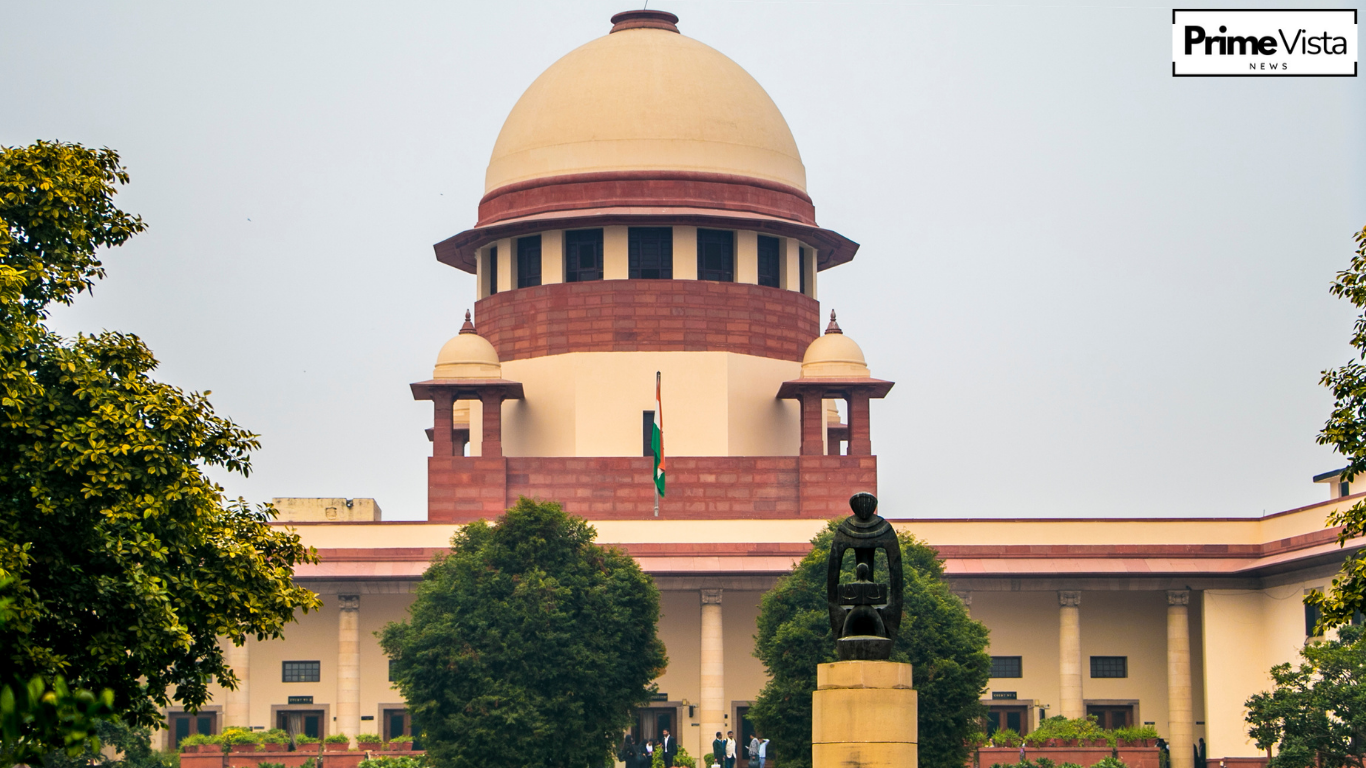
New Delhi: In a significant observation on modern marital expectations, the Supreme Court of India on Friday made it clear that a spouse cannot be treated as domestic help, while hearing a divorce plea filed by a Karnataka man citing “cruelty” over his wife’s alleged refusal to perform household chores.
“You aren’t marrying a maid, you are marrying a life partner,” the Bench remarked, underlining the need for shared responsibilities in a marriage.
Court Rejects Household Chores as Grounds for Cruelty
The Bench, comprising Justice Vikram Nath and Justice Sandeep Mehta, observed that allegations such as a wife not cooking, cleaning, or washing clothes cannot automatically be treated as cruelty under matrimonial law.
“Today’s times are different,” the court said, indicating a shift in how marital roles are viewed in contemporary society.
The remarks came during the hearing of an appeal filed by a man challenging an order of the Karnataka High Court, which had set aside a divorce decree earlier granted by a family court.
Background of the Case
The couple, who got married in 2017, have an eight-year-old son. The husband, a government schoolteacher, had approached the court seeking divorce on grounds of cruelty.
In his plea, he alleged that:
- His wife had a negative attitude from the beginning of the marriage
- She used abusive language towards him and his parents
- She refused to cook food or perform household chores
- She did not invite him to their child’s cradle ceremony
Based on these claims, the trial court had initially granted a divorce decree in his favour.
High Court Overturns Divorce Decree
However, the Karnataka High Court later set aside the family court’s order, ruling that the allegations presented did not meet the legal threshold required to establish cruelty.
This prompted the husband to approach the Supreme Court, seeking restoration of the divorce decree.
Wife Denies Allegations, Makes Counter Claims
During the proceedings, the wife, who is a lecturer by profession, strongly denied all allegations made by her husband.
She told the court that:
- She had gone to her parental home for childbirth with the consent of her husband and in-laws
- Her husband and his family did not attend the child’s cradle ceremony
- She was subjected to demands for cash and gold from her parents
- She was pressured to hand over her salary
She also informed the court that she had not sought any maintenance or alimony, stating that she was financially independent and better placed than her husband.
Mediation Attempt Fails
The Supreme Court had earlier referred the couple to mediation in an attempt to resolve the dispute amicably. However, the effort did not yield any positive outcome.
Following the failed mediation, the Bench has now directed both parties to appear before it in person during the next hearing.
Earlier Coverage – Hyderabad Doctor Dies by Suicide After Family Dispute Over Pet Cat | Alwal Incident !
Court Emphasizes Changing Social Norms
The court’s remarks reflect a broader shift in judicial thinking regarding gender roles within marriage.
By stating that a spouse is a “life partner” and not a “maid,” the Bench emphasised:
- Equal responsibility in managing household duties
- Recognition of professional commitments of both partners
- Evolving societal expectations around marriage
Legal experts say the observation reinforces the idea that marriage is a partnership based on mutual respect rather than rigid, traditional roles.
What Constitutes Cruelty in Marriage?
Under Indian law, cruelty as a ground for divorce typically involves serious mental or physical harm. Courts generally consider factors such as:
- Physical abuse or violence
- Persistent harassment or humiliation
- False allegations damaging reputation
- Mental distress that makes cohabitation intolerable
Mere disagreements over household responsibilities, experts note, are usually not sufficient to meet this threshold.
Broader Implications of the Case
The case highlights the changing dynamics of urban and educated households, where both partners often pursue careers and share responsibilities.
The Supreme Court’s remarks are likely to influence how lower courts assess similar cases in the future, particularly those involving disputes over domestic roles.
It also sends a broader message about equality within marriage, reinforcing that:
- Household responsibilities are shared, not assigned
- Professional women cannot be expected to shoulder domestic work alone
- Marital disputes must be evaluated in the context of modern social realities
What Happens Next
The matter is still pending before the Supreme Court, with the next hearing expected to involve personal appearances from both parties.
The court may attempt further reconciliation or proceed to examine the legal merits of the divorce plea in greater detail.
The Supreme Court’s sharp observation in this case has sparked wider discussion on gender roles, expectations, and equality in marriage.
By clearly stating that a wife is not a domestic worker, the court has reinforced the principle that marriage is a partnership built on mutual respect and shared responsibilities.
Prime Vista News will continue to follow this case and bring updates as the proceedings move forward.