Iran Sets Three Conditions To End War With US, Israel-Demands Compensation And Security Guarantees !
Prime Vista News
Iranian President Masoud Pezeshkian outlines three key conditions to end the ongoing conflict with the United States and Israel, including recognition of Iran’s rights, compensation for war damages, and international guarantees against future attacks.
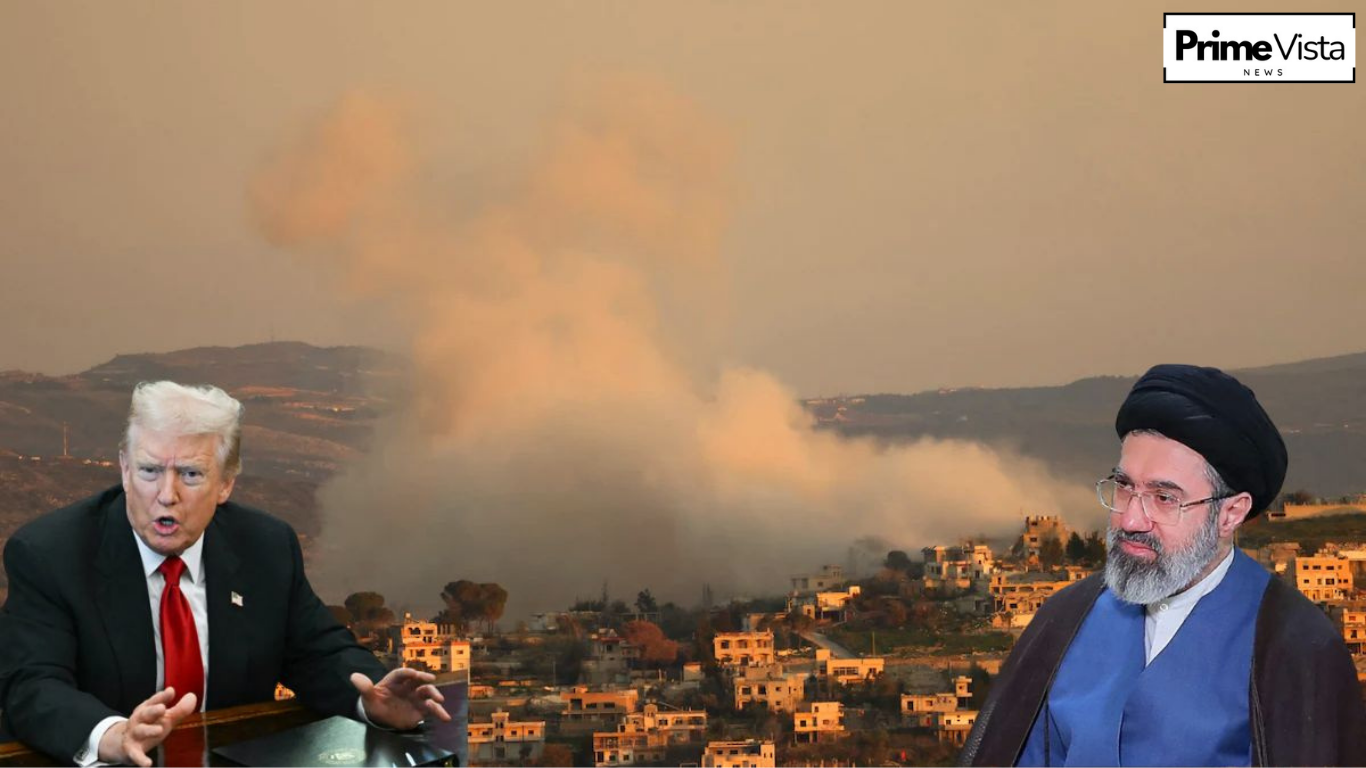
Tehran: Iran has laid down three key conditions that it says must be met before the ongoing conflict with the United States and Israel can come to an end. In a statement shared on social media platform X, Iranian President Masoud Pezeshkian said Tehran remains committed to regional peace but insisted that any ceasefire must include recognition of Iran’s legitimate rights, compensation for damages caused during the war, and firm international guarantees to prevent future military aggression.
The remarks came amid intensifying hostilities in the Middle East, with missile strikes, air raids and growing tensions threatening to widen the conflict further. Iranian leaders have repeatedly accused both Washington and Tel Aviv of initiating the war, a claim strongly rejected by the United States and Israel.
In his post, Pezeshkian said he had held discussions with leaders of Russia and Pakistan about the situation and reiterated Tehran’s willingness to pursue peace, but only if the core demands of the Iranian government are addressed.
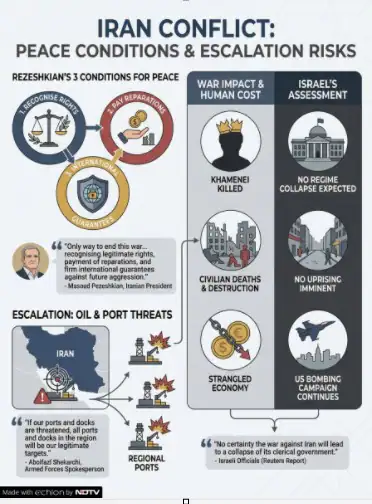
“Talking to leaders of Russia and Pakistan, I reaffirmed Iran’s commitment to peace in the region. The only way to end this war ignited by the Zionist regime and the United States is by recognizing Iran’s legitimate rights, paying reparations, and ensuring strong international guarantees against future aggression,” Pezeshkian wrote.
Talking to leaders of Russia and Pakistan, I reaffirmed Iran’s commitment to peace in the region. The only way to end this war—ignited by the Zionist regime & US—is recognizing Iran’s legitimate rights, payment of reparations, and firm int'l guarantees against future aggression.
The Iranian president’s message signals that Tehran is willing to consider diplomatic pathways, though its demands suggest negotiations could prove difficult given the current geopolitical climate.
Iran’s Three Conditions For Ending The War
According to statements from Iranian officials, Tehran has outlined the following requirements for a ceasefire or negotiated settlement:
Recognition of Iran’s legitimate rights Iran insists that its political sovereignty, security interests and strategic rights in the region must be formally acknowledged.
Compensation for war-related damages Tehran is demanding financial reparations for destruction caused during the military campaign, including damage to infrastructure, civilian areas and economic facilities.
International guarantees against future attacks Iran wants binding assurances from the international community that similar military actions will not be repeated in the future.
Iranian officials argue that these conditions are necessary to ensure long-term stability in the region and to prevent the conflict from reigniting.
Iranian Military Warns Of Wider Regional Targets
While diplomatic signals have emerged from Tehran, Iran’s military leadership has issued strong warnings about potential retaliation if the conflict escalates further.
Abolfazl Shekarchi, spokesperson for Iran’s armed forces, warned that any attack on Iranian port facilities could trigger a broader regional response.
Speaking to state television, Shekarchi said Iran would consider ports and economic centres across the Persian Gulf region as legitimate targets if its own infrastructure were threatened.
“If our ports and docks are attacked, then all ports and docks in the region will be within our reach and will become legitimate targets,” he said.
He added that the Iranian armed forces are prepared to launch a significantly stronger military operation if the country’s maritime infrastructure comes under attack.
The warning reflects Tehran’s broader strategy of deterrence, signalling that escalation by its adversaries could lead to retaliation across critical economic and logistical hubs in the region.
Shekarchi also called on countries hosting American military forces to reconsider their positions.
“We call on the countries of the region to expel the Americans from their lands,” he said, underscoring Iran’s long-standing opposition to the presence of US military bases in the Middle East.
Israeli Officials Uncertain About War’s Outcome
Even as military operations continue, there are signs that some Israeli officials privately question whether the war will achieve its long-term strategic objectives.
According to information reviewed by Prime Vista News, discussions among Israeli leadership circles suggest uncertainty over whether the conflict will ultimately lead to the collapse of Iran’s clerical leadership.
Despite sustained air strikes and missile attacks targeting Iranian military assets, analysts say there is little evidence so far of a major uprising against the Iranian government.
Observers note that the Iranian political system has historically demonstrated resilience during periods of external pressure, often rallying domestic support in response to foreign military action.
Conflict’s Heavy Human And Political Cost
The ongoing conflict has already inflicted severe damage across several Iranian cities. Missile strikes have hit areas in Tehran and other regions, damaging residential buildings, public facilities and infrastructure.
The war has also resulted in significant casualties among both civilians and military personnel, deepening anger among many Iranians and further complicating prospects for reconciliation.
Iranian authorities have reportedly maintained strict security measures within the country, warning that any attempts to organise protests during wartime could face harsh consequences.
Analysts say this environment may partly explain why large-scale demonstrations against the government have not materialised despite economic hardship and growing public frustration.
Economic Strain And Long-Term Challenges
Beyond the immediate military confrontation, Iran continues to face severe economic pressures due to international sanctions and the disruption caused by the war.
The country’s economy has already been struggling under years of financial restrictions, and the latest escalation has added further strain on energy exports, trade routes and investment.
Experts warn that even if hostilities end in the near future, rebuilding damaged infrastructure and stabilising the economy could take years.
Public dissatisfaction over economic conditions has surfaced periodically in recent years, including protests earlier this year that were met with strong government action.
However, analysts believe wartime conditions often shift national focus toward security concerns, temporarily suppressing internal political dissent.
Regional And Global Implications
The conflict has drawn intense international attention due to its potential to destabilise the wider Middle East. With the Persian Gulf serving as a critical hub for global energy supplies and shipping routes, any prolonged disruption could have significant economic repercussions worldwide.
Diplomatic observers say the coming weeks will be crucial in determining whether back-channel negotiations can produce a framework for de-escalation.
Iran’s announcement of conditions for ending the war may signal an opening for talks, though the demands for reparations and security guarantees could prove difficult for its adversaries to accept.
For now, military tensions remain high, and the possibility of further escalation continues to loom over the region.
Prime Vista News will continue to monitor developments as diplomatic efforts and military operations unfold.